
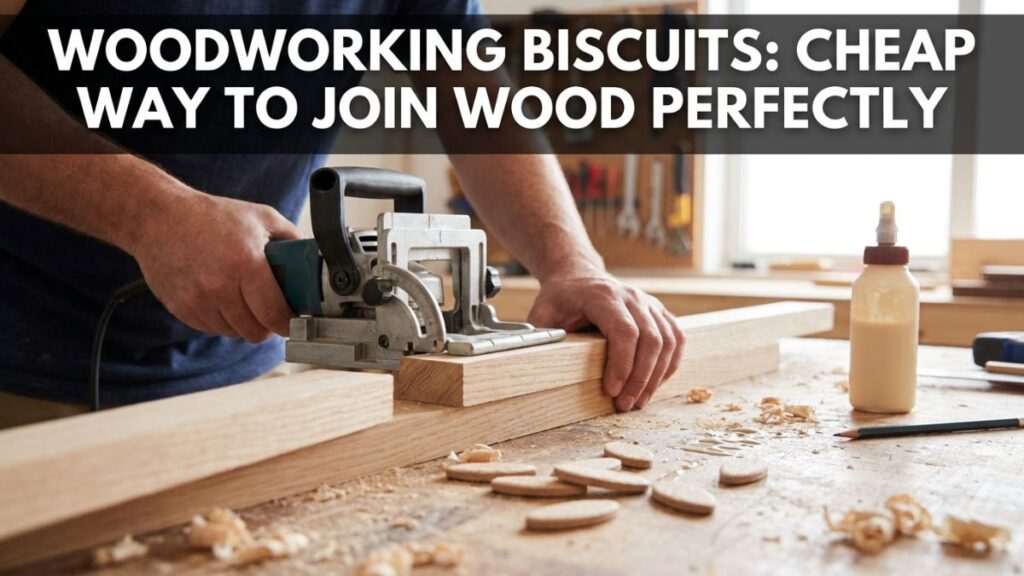

Okay so I have to be honest with you. When I first heard the word woodworking biscuits I was like… wait, is someone eating in the garage or what? I am serious. I come from India, English is not my first language, and when I saw this word in a YouTube video I genuinely got confused. But then I tried it with my own hands and oh my god, woodworking biscuits are probably the best thing I ever used for joining two pieces of wood together. If you are a total beginner like I was, this whole guide is made just for you.
Woodworking biscuits are not food obviously ha. They are small oval shaped pieces of compressed wood, mostly beech or birch wood, and they go inside little slots cut into your wood pieces. When you put glue and press them together the biscuit swells up and creates a super tight bond. That is it. Simple. Clean. No ugly screws showing from outside.
Let me take you through everything I know about woodworking biscuits from the very beginning.
What Are Woodworking Biscuits Exactly?
So imagine two planks of wood you want to stick side by side, like making a tabletop from smaller boards. Now without woodworking biscuits those boards will slide all over the place when you are pressing them with glue and clamps. Very frustating honestly. But when you put woodworking biscuits inside matching slots on both pieces the boards stay lined up like they are locked.
These biscuits are made from compressed hardwood, usually birch or beech. They are thin and shaped like a little football or oval. Very small. Fit in your palm easy. And when wood glue touches them they absorb the moisture and expand inside the slot, tightening everything up from inside. You cant even see them from outside after the joint is done. Thats the beauty of woodworking biscuits really.
Woodworkers and cabinet makers have been using woodworking biscuits since the mid 1950s and they still swear by them today because they save so much time and give very clean results. If you want to go deeper into how biscuit joints work from a technical side, Woodcraft has a really solid biscuit joining basics guide that helped me understand the whole process better when I was starting out. You can check it out at woodcraft.com.
Why Should a Beginner Use Woodworking Biscuits?
This is my personal favorite question because when I started woodworking I thought I had to learn mortise and tenon joinery first. That thing takes forever to learn properly. Woodworking biscuits saved me so much stress honestly.
Here is why woodworking biscuits are perfect for beginners especially on a budget:
They are cheap. A pack of 100 woodworking biscuits costs around $7 to $10 at Home Depot or any local hardware store in USA. You can pick up WEN birch wood biscuits or similar brand and it will last you many many projects.
They keep your boards aligned. When you glue two long boards together they tend to shift and become uneven. Woodworking biscuits act like little anchors that keep both pieces perfectly level while the glue dries. No more uneven joints that need hours of sanding.
The learning curve is almost nothing. Seriously. I figured out the basics in one afternoon. Even if your first joint is not perfect you will get better very fast.
The tool is not that expensive. A basic biscuit joiner machine, also called a plate joiner, can be found for around $40 to $80 for beginner models. Yes there are costly ones too but you dont need those starting out.
And also woodworking biscuits work on many types of wood. Whether you are using hardwood, softwood, or even plywood boards, biscuit joinery handles all of them quite well. Very versatile.
Woodworking Biscuit Sizes Explained Simply
This was a confusing part for me in the beginning because there are three main sizes of woodworking biscuits and nobody really explained it simply.
Here they are:
Size 0 – This is the smallest one. Good for thinner wood pieces or narrow boards. Maybe for small boxes or picture frames. Size 0 is roughly 5/8 inch wide and about 1 and 3/4 inch long.
Size 10 – This is middle size. Very commonly used. Works well for medium thickness wood. Good for shelves, drawer panels, small furniture projects. If you are starting your first project just grab the size 10, it is a safe choice for most basic work.
Size 20 – Biggest one. Use this for thicker, wider boards. Tabletops, cabinet sides, large furniture panels. This size gives more surface contact between the two pieces so a bit more holding power too.
A simple rule I follow: the thicker your wood, the bigger the woodworking biscuit size you should pick. For beginner projects like a small coffee table or a wooden shelf I mostly use size 10 or size 20 woodworking biscuits and they work perfectly.
For building a wooden coffee table from scratch you can check out my guide on DIY wooden coffee table plans where I use biscuit joinery for joining the tabletop boards.
What Tools Do You Need for Woodworking Biscuits?
Good news: you do not need a whole garage full of tools. Here is the basic list:
1. Biscuit Joiner (Plate Joiner) This is the main tool. It cuts crescent shaped slots in your wood where the woodworking biscuits go in. Budget models from Porter Cable, Ryobi, or WEN work totally fine for beginners. You don’t need Festool for starting out at all.
2. Wood Glue Regular PVA wood glue works great. Titebond 2 is a popular choice in the USA and it is not expensive. You apply it inside the slot and on the biscuit before pushing pieces together.
3. Clamps Bar clamps or F-clamps hold your joined pieces tight while glue dries. Speaking of clamps, I wrote a detailed guide on f-clamps for woodworking if you want to understand which clamp works best for which situation.
4. Pencil and Ruler For marking exactly where your woodworking biscuits will go on the wood. Most woodworkers space them around 6 to 8 inches apart along the joint.
5. Sandpaper or Hand Plane (optional) After glue dries you sometimes do light sanding to make the joint super flush and smooth.
That is really it for a budget beginner setup. Total cost for all these tools together is maybe $60 to $100 if you buy carefully. And woodworking biscuits themselves are very cheap so running cost is very low.
How to Use Woodworking Biscuits Step by Step
Alright here is the actual process. I will keep it super simple because thats how I learnt it myself.
Step 1: Mark Your Boards Lay the two wood pieces side by side in the position you want to join them. Draw pencil lines across both pieces together at every spot where a woodworking biscuit will go. These marks help you align the joiner machine correctly on both pieces.
Step 2: Set Up Your Biscuit Joiner Pick the right biscuit size on your machine by turning the adjustment dial. Set the height of the cutter so the slot will be cut roughly at the center thickness of your wood.
Step 3: Cut the Slots Hold the biscuit joiner steady against your wood piece, lined up with your pencil mark. Push the machine forward firmly and let it cut the slot. Do this for every marked spot on both pieces of wood. Keep the machine flat and steady, do not rush this part.
Step 4: Test Fit the Woodworking Biscuits Before putting any glue, do a dry run. Push woodworking biscuits into the slots without glue and press the boards together. They should fit snug but not so tight that you have to force them. If a biscuit feels too tight, check if it absorbed some moisture from humidity in the air. A quick trick is to put such biscuits in your oven at 250 degrees for about 15 minutes to dry them out.
Step 5: Apply Glue Squeeze wood glue inside every slot on both pieces. Also put a little glue on the face of each woodworking biscuit. Now push them into the slots on one side only first.
Step 6: Press and Clamp Bring the second board in and press it over the protruding woodworking biscuits. Line up your boards. Work fast because once the glue touches the biscuits they start expanding quickly. Apply your clamps along the whole length and tighten evenly.
Step 7: Wait and Clean Up Let the glue dry for at least an hour, better if overnight. Wipe off any squeeze out glue with a damp cloth before it sets. Once dry remove the clamps and do light sanding if needed.
Done. You just made a biscuit joint. Congrats seriously because many people overthink this and never actually try it. Family Handyman also has a very good visual step by step walkthrough on making biscuit joints if you want to see photos of each step in action, you can find it at familyhandyman.com.
Where Can You Use Woodworking Biscuits? Real Project Ideas
Woodworking biscuits are super useful for many beginner projects. Here are places I personally used them:
Tabletops: Joining multiple narrow boards to make one big wide surface. Woodworking biscuits keep every board perfectly level with no steps between them.
Wooden shelves: Attaching a shelf panel to a side panel at 90 degrees. Clean, hidden joint with no screws visible.
Cabinet carcass building: Woodworking biscuits are very commonly used when building box style cabinets and bookcases.
Picture frames and decorative boxes: Size 0 woodworking biscuits work great here for smaller joints at corners.
Face frames: The thin frame attached to the front of a cabinet. Biscuit joinery keeps the pieces lined up during assembly.
If you want some cool beginner woodworking project ideas to try these techniques, check out our full list of DIY woodworking projects for beginners free where I share plans step by step.
Woodworking Biscuits vs Dowels: Which Is Better for Beginners?
A lot of beginners ask this. Both woodworking biscuits and dowels are used for joining wood but they work differently.
Dowels are round wooden cylinders that go into drilled holes on both pieces. They are stronger than woodworking biscuits in terms of pure holding power but they are much harder to align perfectly. Even a tiny drilling error and your boards wont line up right.
Woodworking biscuits are forgiving. The oval slot is slightly bigger than the biscuit itself so you have a little room for minor adjustment before the glue sets. This makes woodworking biscuits much more beginner friendly.
For most basic furniture and panel work, woodworking biscuits are honestly enough. The glue is doing most of the strength work anyway and the biscuits are mainly there to keep alignment and add a bit of reinforcement.
If you are building heavy structural things like chair joints or table legs connections then you might want mortise and tenon or pocket screws for more strenght. But for tabletops, shelves, cabinets and box projects, woodworking biscuits are absolutely the right choice.
Common Beginner Mistakes with Woodworking Biscuits
I made some of these mistakes myself so I am sharing to save you the trouble:
Mistake 1: Not doing a dry fit first. Always test your woodworking biscuits in the slots before you put glue. I once went straight to glue and realised the biscuit was too fat and swollen from humidity. Big mess.
Mistake 2: Storing biscuits in open air. Woodworking biscuits absorb moisture from the air easily and they can pre-swell before you even use them. Always store your woodworking biscuits in a sealed zip lock bag or airtight container.
Mistake 3: Using too much glue inside the slot. You only need a moderate amount. Too much glue just squeezes out and makes a mess on your wood surface which then needs extra cleaning and can affect your finish.
Mistake 4: Rushing the clamping step. Once woodworking biscuits touch glue they start swelling fast, sometimes in just a few minutes. Have your clamps ready before you open the glue bottle. Be organised.
Mistake 5: Wrong biscuit size for thin wood. Using size 20 woodworking biscuits on thin 1/2 inch wood will cause the slot to blow through the surface. Match your biscuit size to your wood thickness always.
Budget Tips for Buying Woodworking Biscuits
Look I understand budget is real especially if you are just starting out. Here are my actual tips:
Buy woodworking biscuits in bulk packs. A 100 piece pack costs about $7 to $10 and a 500 piece pack might cost $20 to $25. The per biscuit cost drops a lot when you buy bigger packs.
Brands like WEN, Milescraft and generic packs from Amazon all work fine for beginner use. You dont need super premium beech biscuits for simple home projects.
For the biscuit joiner machine itself, check Facebook Marketplace or Craigslist for used ones. A used Porter Cable biscuit joiner in good condition can go for $25 to $40 which is a very good deal for a beginner.
Also keep watching for sales at Rockler Woodworking stores which frequently offer discounts on joinery tools and supplies for beginners in the USA.
Are Woodworking Biscuits Actually Strong Enough?
This question honestly comes up all the time in woodworking forums and I want to give you a straight answer.
Woodworking biscuits are not the strongest joint in the world. Traditional mortise and tenon joints are much stronger for heavy structural connections. But here is the thing, for most practical furniture work like tabletops, cabinet boxes, shelves and panels, woodworking biscuits combined with proper wood glue are more than enough.
The glue is actually doing most of the holding. The woodworking biscuits just help your boards stay aligned during that drying process and add a little extra reinforcement. Many experienced woodworkers have been using biscuit joints for decades without any failures in regular furniture projects.
So yes, for your home DIY work woodworking biscuits are absolutely strong enough.
Conclusion
So that is everything I know about woodworking biscuits as a beginner hobbyist from my own hands on experience. I genuinely think woodworking biscuits are one of the best things a beginner can learn early because they are cheap, easy to understand, and they make your projects look so much more professional without complicated joinery skills.
The three sizes 0, 10 and 20 cover almost everything you will ever need starting out. The biscuit joiner tool is affordable, the woodworking biscuits themselves cost almost nothing per piece, and the results are honestly very satisfying when you see two boards lining up perfectly after a glue up.
If you have not tried woodworking biscuits yet, just grab a small pack and practice on scrap wood first. You will get the hang of it very fast. And once you do, you will never want to join wood any other way for your regular projects.
Happy building! And do let me know in the comments if you tried woodworking biscuits for the first time, I would love to hear how it went for you.
Frequently Asked Questions About Woodworking Biscuits
Q1. What are woodworking biscuits made of? Woodworking biscuits are made from compressed hardwood, mostly beech or birch, with a diagonal grain pattern that makes them absorb glue well and swell tightly inside the joint slot.
Q2. Do I really need a biscuit joiner machine to use woodworking biscuits? Yes, a biscuit joiner is needed to cut the matching slots in your wood pieces. You can find budget models for under $50 which is good enough for beginner home projects.
Q3. How far apart should I space woodworking biscuits along a joint? A general rule is to space woodworking biscuits about every 6 to 8 inches along the joint line for good alignment and support without overloading the joint.
Q4. Can woodworking biscuits be used on plywood? Yes, woodworking biscuits work very well on plywood. They help align the edges neatly and add some reinforcement which is very useful when building cabinets or box panels from plywood sheets.