

Okay so I remember the very first day I tried to figure out how to use a router table woodworking. I just stood there staring at it like a confused person. No joke. Watched maybe 4 or 5 YouTube videos and still felt like nothing made sense. If that is you right now, totally fine. You are not alone and this guide is made exactly for people like you and me.
Learning how to use a router table woodworking honestly changed my whole DIY game. And I am just a regular guy from India who started woodworking as a hobby with zero professional training. If I figured this out you can absolutely do it too.
This whole post is gonna explain how to use a router table woodworking in the simplest words possible. No confusing jargon, no fancy book language. Just plain steps that even a new person can follow from day one.
Lets get into it.
What Is a Router Table Anyway
Before I talk about how to use a router table woodworking properly, you need to understand what this thing actually is. Because if you dont know the basics, the steps later wont make much sense.
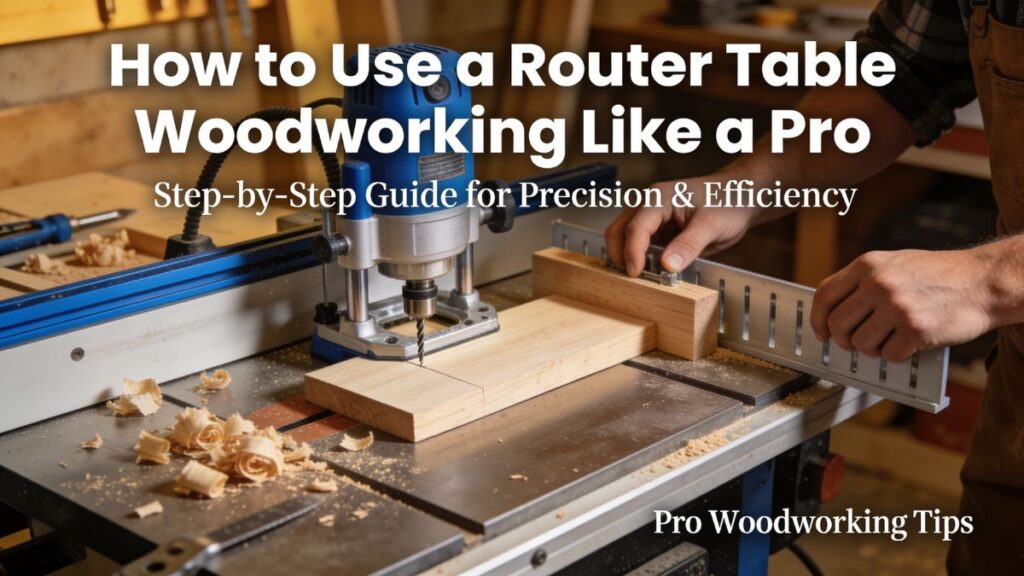
A router table is basically a flat table with a router machine fixed upside down underneath it. The spinning bit comes up through a small hole on the top surface. So instead of you moving the router over the wood, here you move the wood over the router bit.
Think of it this way. Imagine pushing a piece of paper over a pencil that is sticking up through a hole in a table. That is kinda how how to use a router table woodworking works in the most simple way I can describe it.
When the router is mounted under the table the whole thing becomes so much more stable and safer to work with. Especially for beginners who are still getting comfortable with the machine.
Why Should You Even Learn How to Use a Router Table Woodworking
Good question. I asked the same thing when I first started. Here is what I found after many weeks of using mine.
When you know how to use a router table woodworking the right way you can make beautiful clean edges on shelves, table tops, frames, and so many other things. You can cut grooves, dadoes, rabbets, and slots. The list of router table uses is honestly pretty long once you get into it.
Also working with small wood pieces using a handheld router is honestly risky. Your fingers are too close to the spinning bit. But when you learn how to use a router table woodworking properly the table supports the wood completely and your hands stay far away from the bit the whole time.
And once you are comfortable knowing how to use a router table woodworking you can even use it to do joinery work without buying expensive separate machines. More on that trick a bit later in this post.
Parts of a Router Table You Need to Know First
Before jumping into how to use a router table woodworking step by step, let me quickly go over the main parts. Because if you dont know what the fence is or what the router table insert does, you will get stuck and confused halfway through.
The Table Surface is the flat top where your wood slides over during cutting. It needs to be smooth and completely flat otherwise your cuts will come out uneven.
The Router Table Insert is a removable flat plate that sits around the bit hole in the table. It fills the open gap between the router body and the table surface. The router table insert must sit perfectly level with the rest of the table surface. If it is even slightly high or low your wood piece will catch on the edge of it mid cut and ruin everything. I wasted two good pine boards before figuring this out sadly.
The Fence is the vertical guide piece that runs across the table top. You slide your wood along it while cutting. Knowing how to use a router table fence the right way is honestly half of knowing how to use a router table woodworking. It controls exactly where the bit contacts your wood.
The Router Bit sticks up from the table through the insert plate. Different bit shapes make different edge profiles or cuts. As a complete beginner just start with a simple roundover bit or a basic straight bit. Dont go buying 20 different bits right away.
Featherboards are small push accessories that press your wood firmly against the fence during cutting. They are cheap to buy or you can actually make them yourself from scrap wood. Very helpful for cleaner cuts.
How to Use a Router Table Woodworking Step by Step
Okay this is the main part of the whole post. Here I am going to walk you through how to use a router table woodworking in actual clear steps so you can go try this out today itself.
Step 1: Put the Router Bit In Correctly
The first rule of how to use a router table woodworking safely is this. Always unplug the router or switch it fully off before you ever touch the bit area. Every single time without exception.
Pull out the old bit if one is already loaded. Push your new bit into the collet, which is the metal gripping part under the table. Push it all the way in then pull it back just a tiny amount, like barely 1mm. That small space lets the bit expand slightly when it heats up during use. Now tighten the collet nut firmly but dont go crazy overtightening it.
Step 2: Set the Bit Height Low to Start
The height of the bit controls how deep your cut will be. When you are just beginning to learn how to use a router table woodworking, always start with the bit set really low. Like barely poking above the table surface.
Use a small ruler to measure the height. You can always raise it more for deeper cuts later. Trying to take a big deep cut all in one go is one of the most common and costly beginner mistakes when learning how to use a router table woodworking. Dont do it.
Step 3: Position the Fence
This step is super important when learning how to use a router table fence correctly. The fence position controls how much of the bit contacts your wood piece.
Loosen the fence clamps, slide the fence toward or away from the bit, then lock it back down tightly. One thing I found confusing when starting out, the fence does not need to be perfectly square or parallel to the bit like with a table saw. Because the bit is round, the distance from the center of the bit is what actually matters, not the angle of the fence. Once that distance is right you are set to go.
Step 4: Test Cut on Scrap Wood First Always
This is the golden rule of how to use a router table woodworking that every beginner needs to burn into their memory. Before touching your real project wood, always take a scrap piece and run that through first. Check the cut depth, check the edge quality, then adjust as needed.
I ruined a nice board early on because I skipped this simple step. Dont be me on that one.
Step 5: Feed the Wood in the Correct Direction
Okay this part is really critical for safety. When learning how to use a router table woodworking you must always feed your wood from right to left when using the fence. The bit spins in a direction where feeding right to left means the bit pushes against the wood in a controlled safe way.
If you feed from left to right the bit will actually grab the wood piece and fling it away from your hands at high speed. That is called a kickback and it is genuinely scary and dangerous. So right to left, always, every single cut, no exceptions when doing how to use a router table woodworking.
Step 6: Move at a Steady Medium Pace
Dont rush your feed and dont go too slow either. When you are first figuring out how to use a router table woodworking, getting the right feed speed takes a little practice time.
If you push too fast the wood surface comes out rough and chippy. If you push too slow the bit burns the wood and leaves dark black marks on the edge. A nice steady medium pace gives the cleanest results every time.
How to Safely Use a Router Table (Read This Part Please)
Before going further with how to use a router table woodworking, let me talk about safety seriously for a minute. Because knowing how to safely use a router table is just as important as the technical cutting steps.
Wear safety glasses every single time the router is running. The bit spins at very high speed and tiny wood chips fly in all directions constantly.
Use ear protection too. A router table is genuinely loud. After even one hour without earplugs your ears will be ringing.
Never ever wear work gloves while routing. I know this sounds backwards but gloves can actually get caught on the spinning bit and pull your fingers right into it. Bare hands only, always.
Use push sticks and featherboards to keep your fingers safely away from the bit, especially when working with narrow or small wood pieces. This is a very key part of how to safely use a router table that many beginners skip early on.
And unplug the router before changing any bit. Every single time. No shortcuts on this one. When you are learning how to use a router table woodworking these safety habits must become automatic.
Router Table Uses You Can Try as a Beginner
Now that you know how to use a router table woodworking, let me share what you can actually create with it. Because the whole point is making cool things right.
Decorative edge profiles are the most beginner friendly thing to try first. A simple roundover bit turns a sharp wood edge into a smooth curved edge. Makes any shelf or table top look way more finished and professional looking.
Dadoes and grooves are cuts that go across or along the wood surface. They let you slide shelves into bookcase sides or join two wood panels together neatly. Knowing how to use a router table woodworking for dadoes is a total game changer for any furniture project.
Rabbet cuts create a step shape along the edge of a wood piece. Very useful for making drawer boxes, cabinet backs, and picture frames.
Custom wood moldings are another great use. Once you get comfortable with how to use a router table woodworking you can make your own trim pieces right at home instead of buying expensive ones from the hardware store.
For actual project ideas and plans to try, go check out our full guide on router table woodworking plans where I have some simple beginner friendly projects listed out.
How to Use a Router Table as a Jointer (Budget Hack Alert)
This is one of the most underrated things that nobody talks about when you first start learning how to use a router table woodworking. And honestly it saved me a lot of money.
A jointer is a separate woodworking machine that smooths and straightens rough board edges. A new one costs anywhere from $300 to $600 or more. Most beginners including me when I first started simply cannot spend that money on one machine.
Here is the amazing part though. You can do the exact same job using your router table with almost zero extra cost.
To use how to use a router table as a jointer you need a straight bit and you need to offset your fence halves slightly. The infeed side of the fence sits back just a little compared to the outfeed side, roughly the same tiny amount of material you plan to shave off the edge. When you run your rough board edge along this offset fence setup the bit shaves off a perfectly flat thin layer. The outfeed fence side then supports that newly cut edge going forward.
The result is a straight clean smooth board edge, exactly what a dedicated jointer machine does. When I figured out how to use a router table woodworking this way it honestly felt like discovering a cheat code. Saved around $400 basically.
How to Build a Router Table on a Budget
If you dont want to spend money on a store bought router table right now, you can definitely build one yourself. A basic homemade version works perfectly fine when you are first learning how to use a router table woodworking.
All you need is a flat piece of MDF or plywood for the table top, a simple router mounting plate, some straight wood pieces for the frame and legs, and a basic L shaped fence made from two straight boards. The total cost can be around $40 to $70 depending on what scraps you already have.
Knowing how to build a router table yourself also helps you understand the machine much better before you even start routing your first piece of wood.
For a completely free and very detailed DIY router table build guide, the folks at Woodgears.ca have step by step instructions that are super easy to follow even for total beginners. Worth bookmarking for sure.
Once your table is ready, learning how to use a router table woodworking on a setup you built yourself feels even more satisfying honestly.
If you are setting up your first workshop on a small budget, our post on woodworking garage setup for beginners on a budget covers a lot of helpful ideas for keeping costs down while building a solid workspace.
How to Use a Router Table Fence in More Detail
Since the fence is used on almost every single cut, let me spend a bit more time on how to use a router table fence properly because it really does matter a lot when you are learning how to use a router table woodworking.
For cuts where the bit is fully exposed above the table, you move the fence closer to the bit center to remove more material or further away to remove less. That simple adjustment controls your cut depth on the edge of the wood.
For bearing guided bits like a roundover or chamfer bit, the small bearing at the bottom of the bit itself controls the cutting depth. You still use the fence as extra support and stability but the bearing does the depth guiding. This is a slightly more advanced part of how to use a router table woodworking but good to understand early.
Split style fences where the left and right halves move independently are really useful. You can close the gap around the bit tightly so small wood pieces dont accidentally tip into that open gap during a cut. This small detail is super important for safe how to use a router table woodworking for beginners practice.
When doing longer boards always clamp a featherboard to the table to keep steady even pressure against the fence throughout the whole cut. Without that pressure the wood can drift away from the fence mid cut and your edge profile will come out wavy and uneven.
For more in depth reading on router table fence setups and bit types, Rockler Woodworking at rockler.com has a really solid free resource page that goes deeper into techniques once you are past the beginner stage.
Common Beginner Mistakes in How to Use a Router Table Woodworking
Let me be real with you about the mistakes I made when I was first learning how to use a router table woodworking. Maybe reading this will save you from doing the same dumb things.
Taking too deep a cut in one single pass is probably the most common beginner mistake in how to use a router table woodworking. The bit can stall, overheat, or chip badly into the wood. Always take multiple light shallow passes and raise the bit height a small amount each time until you reach the final depth you want.
Not checking if the router table insert is perfectly level is another one I made. My insert was slightly high on one side and every single cut had the wood catching on it. I ruined three boards before figuring out the actual problem. Always check that the insert sits completely flush with the table surface before starting.
Feeding the wood in the wrong direction. I did this once. The wood shot across the room. Nothing got damaged but the fright was enough to never forget the right direction again. Right to left, always.
Skipping featherboards. Without the constant steady pressure a featherboard provides, keeping your wood against the fence while pushing is tiring and inconsistent. The cuts end up uneven and wavy.
Using dull router bits. A dull bit burns the wood edge, makes horrible screaming noises, and gives really bad cut quality. Sharp bits are absolutely everything in how to use a router table woodworking. If a bit looks darkened or the cutting feels like it is dragging heavily, replace it or have it sharpened before continuing.
Not doing a test cut on scrap wood first. Proper how to use a router table woodworking for beginners always starts on scrap pieces. This is not optional. Make it a rule you never break.
Quick Summary of How to Use a Router Step by Step
For those who need a fast recap, here is how to use a router step by step in the shortest version possible.
Unplug first, then insert the bit correctly, set the bit height super low to start, position the fence where you want it, clamp down featherboards, run a test cut on scrap wood, then feed your actual wood from right to left at a nice steady pace.
That is the complete basic loop of how to use a router table woodworking in the most simple form. Each step gets easier and more natural after just a few practice sessions. The first time feels weird and shaky. By the fifth or sixth time it starts to feel pretty normal and controlled.
Budget Friendly Router Tables for USA Beginners
If you want to buy a ready made router table without spending too much money, here are some realistic options for people just starting out with how to use a router table woodworking in the USA.
Benchtop router tables are the most affordable and practical option for beginners. They sit right on your existing workbench and take up much less space than floor standing models. Many good options are available under $150 and work perfectly fine for all basic routing tasks a beginner would need.
A basic starter router bit set with 10 to 15 common bit types can usually be found for around $25 to $40 online or at your local hardware store. This gives you enough variety to explore different how to use a router table woodworking techniques without spending a lot upfront.
The whole point of how to use a router table woodworking on a budget is starting simple, using what you have, and upgrading slowly as your skill and confidence grows over time. You genuinely do not need expensive gear to get great results as a beginner.
FAQs About How to Use a Router Table Woodworking
Do I need an expensive router table to start learning how to use a router table woodworking?
No not at all, a basic benchtop router table under $150 works perfectly fine for beginners starting out with simple edge profiling and grooves.
Which direction should I always feed wood on a router table?
Always feed from right to left when using the fence, this goes against the bit rotation direction and gives you safe controlled cuts every time.
Can I use my handheld router bits inside a router table?
Yes in most cases you can, just make sure the shank size of the bit matches your router collet size, usually either 1/4 inch or 1/2 inch shanks.
Why does my wood keep getting burn marks during router table cuts?
Usually means your feed speed is too slow or your bit is getting dull, try moving slightly faster and check if the bit needs to be replaced.
Conclusion
So that is the full honest guide on how to use a router table woodworking from a complete beginner perspective. I know it looks like a lot of information right now but once you actually stand at your router table and do your first real cut, everything starts clicking into place really quickly.
Start super simple. Use cheap scrap wood first. Keep the bit height low. Practice the right feed direction until it becomes pure muscle memory. Then slowly add more complexity as your confidence keeps building.
How to use a router table woodworking changed the quality of my home projects more than almost any other single tool I own. The edges look cleaner, the joints fit better, and I can build things I simply could not before.
If you want to try actual projects after reading this, go browse our router table woodworking plans post and pick something small and simple to start with. Even a basic shelf with a routed rounded edge will make you feel incredibly proud of yourself.
Take it slow, stay safe, and enjoy every cut. Happy routing friends!