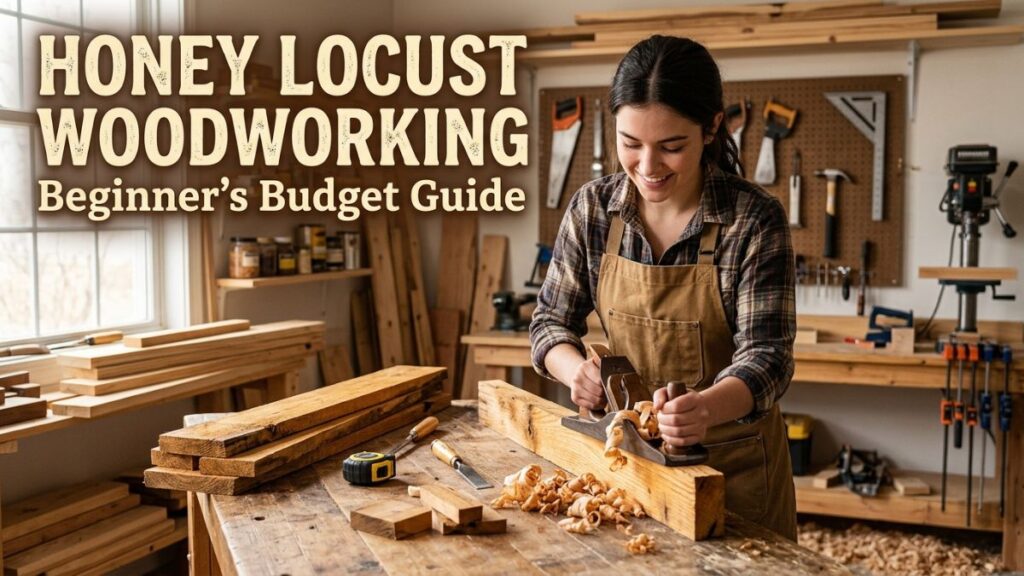

Okay so I have to be honest with you guys. When I first heard about honey locust woodworking I literally thought someone was pulling my leg. Honey? Locust? What kind of wood name is that even. But then one day my neighbor was getting this big thorny tree cut down in his yard and the guy removing it just said “want the wood?” and I said yes without even thinking twice.
That was honestly one of the best decisions I made in my whole DIY journey. And today I want to share everything I know about honey locust woodworking so you dont waste time like I did figuring things out the hard way.
So lets get into it properly.
What Is Honey Locust Wood Actually
Before you go buying anything or starting any project you need to understand what this wood is.
Honey locust (Gleditsia triacanthos) is a hardwood tree that grows mostly in central and eastern North America. And the wood it gives is actually quite beautiful when you cut into it. The honey locust wood color ranges from a pale yellowish sapwood on the outside to a warm reddish brown heartwood inside. It kind of looks like a mix between cherry and oak which is honestly really pretty.
The grain is mostly straight but sometimes goes a little wavy or irregular which gives each piece its own character. Some boards even show this two tone pattern where light and dark areas mix together. This thing is called figuring and it makes honey locust wood furniture look like something expensive from a fancy shop.
Now here is the thing that most other guides dont tell you. The wood can vary alot from tree to tree. Sometimes you get punky spots or small soft areas in an otherwise perfect board. So when you are picking your lumber you gotta check each piece carefully. Dont just grab any board blindly.
Is Honey Locust Good for Woodworking as a Beginner
Short answer yes but with some small warnings.
Honey locust woodworking is a bit challenging because this wood is quite dense and hard. The Janka hardness rating of honey locust is around 1580 lbf which is higher than red oak at 1290 and also higher than hard maple at 1450. So it will dull your blades faster than softer woods.
But here is the thing that most beginners dont realize. The wood actually responds well to sharp tools. If you keep your saw blades and chisels sharp then honey locust woodworking becomes much more manageable. I found that taking slow passes with my circular saw instead of rushing through cuts made a huge difference.
The wood glues well, stains well and takes finish beautifully. So even if the cutting part is a little tough, the finishing stage is actually very satisfying and rewarding.
If you are totally new to this whole wood journey and wondering how to even begin, I would suggest you first check out how to start woodworking with low budget in 2026 before diving into honey locust woodworking specifically.
Honey Locust Wood Color and Appearance Explained Simply
One thing that really hooked me into honey locust woodworking is the color. Like seriously this wood has beautiful tones.
The sapwood part which is the outer part of the trunk is pale yellow sometimes almost cream colored. Then as you go deeper towards the center you get into the heartwood which is light red to reddish brown. When you apply any oil finish or even just sand it properly the color becomes even more warm and glowy.
What I personally love is that the honey locust wood color kind of changes depending on the lighting. In sunlight it looks golden amber. In indoor light it looks more deep brown. Your finished piece basically looks different at different times of the day which is kind of magical honestly.
Over time the red tones will fade a little bit naturally which is normal for most hardwoods. But even after fading it still looks really good. I have a small shelf I made from honey locust like two years back and it still looks gorgeous.
Honey Locust Wood Price: What to Expect on a Budget
Okay lets talk money because I know thats what most beginners worry about.
Honey locust wood for sale is not super common at your local big box store like Home Depot. Its more of a specialty wood so you wont always find it at every lumber yard. The honey locust wood price at specialty lumber suppliers is generally in the mid to upper range for domestic hardwoods. Online lumber shops sell it per board foot and prices can vary quite a bit depending on the quality and where you buy from.
But here is my budget tip that other guides completely skip over. Contact local tree removal services or arborists in your area. When someone in your neighbourhood gets a honey locust tree cut down those guys often just want to haul it away. If you ask nicely and maybe offer to help load some pieces into your truck many times you can get honey locust logs for free or almost nothing.
I personally got my first batch of honey locust woodworking material this way. My neighbor paid for tree removal and I walked away with beautiful wood that cost me zero dollars. From that one tree I made a small side table, two cutting boards and a bunch of turning blanks.
You can also find honey locust wood for sale on local marketplace apps, local sawmills and sometimes on specialty online lumber retailers. Always check if the wood is kiln dried before buying because green freshly cut honey locust will warp and crack if you use it right away.
Honey Locust Wood vs Black Locust: Which One for Beginners
People get confused between these two a lot. Including me when I started.
They both look somewhat similar and have locust in the name but they are actually totally different species from different genus groups. Honey locust is Gleditsia triacanthos and black locust is Robinia pseudoacacia. They are not closely related at all even though they look kind of similar.
In terms of honey locust wood vs black locust the main differences are hardness and decay resistance. Black locust is slightly harder at around 1700 lbf on the Janka scale compared to honey locust at 1580 lbf. Black locust is also considered more rot resistant which makes it better for outdoor use without sealing.
For beginners doing indoor honey locust woodworking projects like furniture or small items, honey locust is actually a slightly better starting point. The reason is that honey locust is a tiny bit easier to work with compared to black locust which is extra hard and can be really tough on beginner hand tools.
Both woods have those scary looking thorns by the way. So when you handle raw logs be super careful and wear thick gloves. Those thorns are no joke they can puncture right through thin gloves easily.
Honey Locust Woodworking Projects for Beginners on a Budget
Alright this is the part everyone actually wants to know about. What can you actually make.
Here are some honey locust woodworking projects that are perfect for beginners and wont break your wallet.
Small Cutting Board This is my number one recommendation for your first honey locust woodworking project. You only need a few small pieces of wood, some basic tools and wood safe oil for finishing. Because honey locust is food safe and very hard wearing it makes an amazing cutting board that will last many years. Budget wise you can make a nice cutting board for under 20 dollars if you source your wood carefully.
Simple Side Table or Stool A small side table or stool is a great next step in honey locust woodworking. The hardness of the wood means your table will be super sturdy and tough. You can use basic pocket hole joinery which is beginner friendly. A simple two board top with four legs can be made in a weekend with minimal tools.
Wall Shelf Honey locust wood makes gorgeous wall shelves. The reddish brown tones look beautiful against white or neutral painted walls. A single board shelf with some simple bracket hardware is achievable even for a total beginner. If you want inspiration for planning shelves and storage type pieces check out these woodworking bookcase plans which have some helpful layout ideas.
Turned Items and Small Bowls If you have access to a lathe then honey locust woodworking really shines in turning projects. Small bowls, pens, drawer knobs and decorative objects all come out beautifully because the grain and color are so striking. This is also a great way to use smaller pieces or off cuts that would otherwise go to waste.
Honey Locust Flooring For those who want to go big eventually honey locust flooring is a beautiful option. Because of the hardness it handles foot traffic really well. However this is more of an intermediate project not beginner level. The honey locust flooring installation requires more careful planning, proper drying of the wood and some extra skill. Start with smaller projects first then work your way up to this one.
Honey Locust Woodworking Kit: Do You Need a Special Kit
Some people ask about honey locust woodworking kit options and honestly there is no specific kit sold just for this wood type.
What you actually need is a decent beginner woodworking toolkit that includes sharp saw blades, chisels, sandpaper in multiple grits starting from around 80 grit going up to 220 grit, and some good quality wood finish. Because honey locust is dense you want carbide tipped blades rather than cheap steel ones.
For finishing honey locust wood furniture I personally use a danish oil or a simple linseed oil mix for smaller pieces. It brings out the color beautifully without covering the natural grain with a thick plastic looking coat.
If you have never done any woodworking before and your goal is honey locust woodworking on a tight budget I would say start with just a circular saw, some basic clamps, sandpaper and hand chisels. You dont need a fancy workshop. I did my first honey locust projects on two sawhorses in my driveway.
One important tip about sanding. Honey locust can be a bit splintery when sanding rough surfaces. Always start with a coarser grit and work your way up slowly. Dont rush from 80 grit straight to 220 because you will get scratches that are hard to remove later. Take your time and the finish will be super smooth.
Honey Locust Wood Furniture: Budget DIY Ideas
Making honey locust wood furniture on a budget is totally doable if you plan properly.
The key thing I learned is to keep your first furniture pieces simple. A bench with two thick slabs for the seat and four legs made from the same honey locust wood can look absolutely stunning. No complicated joinery needed for your first piece.
Because honey locust wood is ring porous meaning it has open grain like white oak you might need to fill the pores before applying a smooth finish. A simple grain filler or a couple of extra coats of finish with sanding in between will sort this out. Dont skip this step especially for furniture pieces because otherwise the finish can look a little uneven.
Also when making honey locust wood furniture for outdoors always seal it properly. While honey locust does have some natural resistance to decay it is not as tough as black locust in wet outdoor conditions. A good outdoor rated oil or sealant will protect your furniture for many years.
I think honey locust wood furniture is genuinely one of the most underrated DIY project ideas out there. People walk past these trees every day and have no idea there is gorgeous furniture grade wood right in front of them.
Practical Tips I Wish Someone Told Me Earlier About Honey Locust Woodworking
Let me just dump some honest tips here that took me time to figure out on my own.
Sharp tools are absolutely non negotiable. I cannot stress this enough. Honey locust will destroy a dull blade faster than almost any other common wood I have worked with. Check and sharpen before every session.
Always go slow when cutting. Rushing a cut in honey locust woodworking leads to burning marks and rough surfaces that require alot of extra sanding. Patient slow passes give much cleaner results.
Let your wood dry properly. If you get green freshly cut honey locust do not use it for at least 6 to 12 months after milling. Sticker stack the boards with small wooden strips between each layer to allow airflow and let it dry naturally. This prevents warping and cracking.
Wear a dust mask when sanding. All wood dust is a health risk and honey locust is no exception. A basic N95 mask is fine for occasional hobby work.
Check for punky or soft spots before starting your project. Sometimes a board that looks perfect on the surface has soft spots inside. A gentle tap with a mallet reveals hollow or soft areas that are not suitable for structural parts of your project.
Honey Locust Woodworking: Frequently Asked Questions
Is honey locust wood good for beginners?
Yes it is manageable for beginners if you use sharp tools and take your time cutting. Its a bit harder than oak but the results are worth the extra care.
Where can I find honey locust wood for sale near me?
Check local tree removal companies, sawmills, specialty lumber websites, and local online marketplaces. Sometimes you can get it for free from neighbours getting trees removed.
What is the difference between honey locust and black locust for woodworking?
Black locust is harder and more rot resistant making it better for outdoor structural use, while honey locust is slightly easier to work and gives beautiful warm colored furniture and indoor projects.
Can honey locust wood be used for flooring?
Yes honey locust flooring is a great choice because of its high hardness rating. However it is better suited for intermediate or experienced woodworkers rather than complete beginners starting out.
Conclusion
So that is my honest complete guide to honey locust woodworking from someone who started with zero experience and just said yes to a pile of thorny tree logs in his neighbor’s yard.
Honey locust woodworking is genuinely one of the most rewarding paths you can take as a beginner hobbyist. The wood is beautiful, surprisingly strong, takes finish amazingly well and can be sourced on a very tight budget if you know where to look. Whether you are making a small cutting board, building honey locust wood furniture or dreaming about honey locust flooring one day this wood will never disappoint you visually.
Yes it needs sharp tools. Yes it is harder than pine or poplar. But none of that should scare you away. Because when you hold a finished piece of honey locust woodworking in your hands and see that warm reddish brown grain glowing under the light you will understand exactly why I am so excited about this wood.
Start small, stay patient and enjoy the journey. That is really all honey locust woodworking comes down to for us beginners.
Happy building everyone. Udit here from easydiywood.com signing off. Lets go make something beautiful.
Want to explore more DIY wood projects ideas for beginners? Check out easy DIY wood projects to make money for more inspiration on turning your hobby into something useful.
For more detailed guides on working with hardwoods from scratch visit Wood Database and Woodworkly for technical wood properties references.