
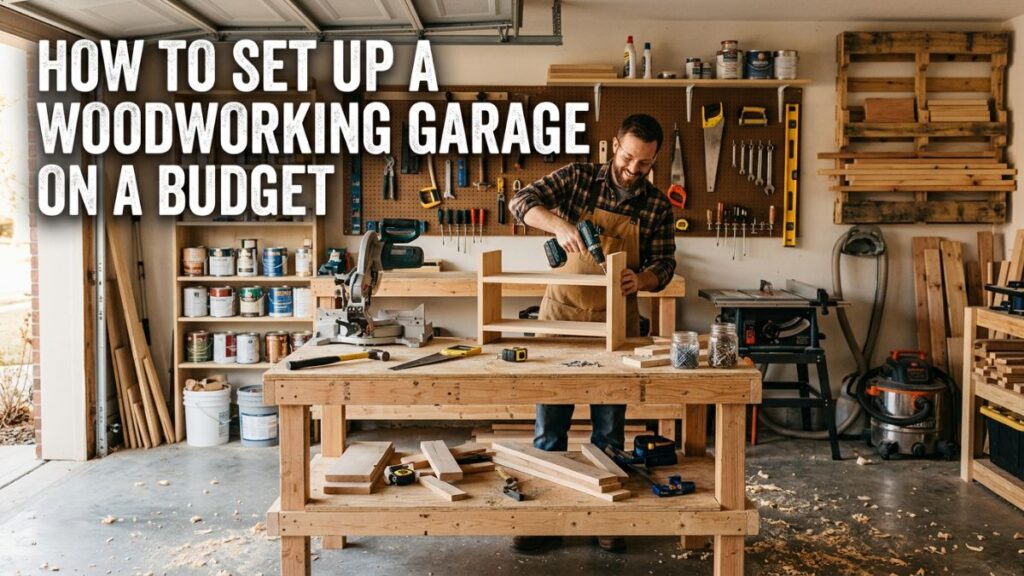

Okay so let me be honest with you. When I first thought about turning my garage into a woodworking garage, I genuinely had no idea what I was doing. Like zero. I just had this old single car garage full of junk boxes, one broken bicycle, and maybe two outlets on the wall. That’s it. Nothing fancy.
And still… I turned it into my little woodshop. Slowly, messily, and yes on a very tight budget.
So if you are sitting there wondering how to start your own woodworking garage without spending thousands of dollars right away, this guide is just for you. I am gonna share everything I learned step by step in simple words. No complicated stuff, I promise.
What Is a Woodworking Garage Anyway?
A woodworking garage is simply a garage space you use for making wood stuff. Could be small shelves, wooden boxes, a bench, or whatever you feel like building. You dont need a fancy dedicated building or a big professional setup for this.
Most people in USA already have either a 1 car garage or a 2 car garage at home. And both are actually really good enough to start your woodworking garage journey. Seriously, dont overthink this part.
I started in a tiny single car garage and made some of my best early projects there. So space is not really the big problem people think it is.
Step 1 First Clean Out That Garage Completely
Before anything else, you have to empty that space. Like totally empty it.
I know it sounds obvious but trust me, most people skip this step and then wonder why their woodworking garage feels always messy and crowded. All those old tires, holiday boxes, random tools from years ago, they all need to go somewhere else first.
Once you see the empty floor and walls, only then you can actually plan your woodworking garage layout properly. Think of it like a blank paper you are about to draw something nice on.
Step 2 Understand Your Garage Size Before Planning Anything
Now this is something most beginner guides skip over and it really shouldnt be skipped.
A typical 1 car garage in the USA is roughly 10 feet wide and 20 feet long. That gives you about 200 square feet to work with. Sounds small maybe but its genuinely enough to have a working woodworking garage setup.
A 2 car garage is usually around 20 feet by 20 feet or sometimes bigger. That opens up a lot more flexibility for your woodworking garage because you can create separate zones for cutting, assembling, and storing wood.
So before you go buy anything, first just grab a tape measure and write down your actual garage size on paper. That one small step will save you so much headache later.
Small Garage Woodworking Shop Layout That Actually Works
Okay this is the part I struggled with the most in the beginning and I bet you will too.
For a small garage woodworking shop layout, the best trick is this. Keep your walls busy and your floor as clear as possible. That is the main rule.
Put your tools and storage along the side walls. Leave the center of your woodworking garage open for working, moving, and cutting long pieces of wood. Simple as that.
When I set up my 1 car garage workshop, I made the mistake of putting a big workbench right in the middle. Big mistake. I could barely walk around and every time I needed to cut something long I was bumping into stuff.
Moving the bench to the wall changed everything. Suddenly my small woodworking garage felt twice as big even though nothing actually changed.
1 Car Garage Woodworking Shop Layout Tips
For your 1 car garage woodworking shop layout, here is what works best for beginners on a budget.
Place your main workbench along the longest wall. This is usually the back wall. Keep it close to at least one electrical outlet because you will need power for your tools.
Your miter saw or any cutting tool should be placed near the garage door side. Why? Because when you are cutting long boards, they can stick out through the open garage door without hitting anything. Smart right?
Use the opposite side walls for shelves and hanging tools. Pegboard is your best freind here for this kind of woodworking garage storage. It costs very little, maybe $20 to $30 at a hardware store, and you can hang all your hand tools on it super easily.
Also for a 1 car garage workshop, think about using wheeled or mobile tool bases. If your tools have wheels under them you can push them to the center when working and roll them back to the walls when done. This is a game changer for small woodworking garage spaces.
2 Car Garage Woodworking Shop Layout Tips
Now if you are lucky enough to have a 2 car garage then wow you have so much room to work with for your woodworking garage.
With a 2 car garage woodworking shop layout, you can actually make different zones. One zone near the garage door for heavy cutting work. One zone along the back wall for assembly and finishing. And the side walls for all your woodworking garage storage ideas and tool hanging.
The table saw, if you decide to get one later, should go near the garage door. This way you can feed long boards in from outside when needed. Very practical and it costs you nothing extra.
Assembly tables can go in the middle or along a side wall depending on how much space you have. Even a basic folding table works perfectly fine for a beginner woodworking garage setup.
One more tip for 2 car garage users. If a family member parks their car inside too, put all your tools on mobile bases or make sure your layout lets one car still park without knocking anything over. Many people in the USA share their woodworking garage with a car and it totally works with some planning.
Woodworking Garage Storage Ideas That Dont Cost Much
Okay this is something I really love talking about. Woodworking garage storage ideas on a tight budget.
First, pegboards on the wall. Already mentioned this but seriously, so cheap and so useful. You can hang saws, chisels, clamps, measuring tapes, everything on there.
Second, old wooden pallets. You can get these for free from stores or warehouses near you. Lean them against the wall or mount them to store your spare wood pieces and planks in your woodworking garage. Takes no money at all.
Third, build simple wooden shelves yourself. This is actually a great beginner project. Make a few shelves along the walls of your woodworking garage to store your stuff. You will learn basic skills AND get useful storage at the same time. Win win.
Fourth, mason jars or any old clear containers. Screw the lids to the underside of a shelf and then screw the jars onto the lids. Now you have hanging storage for small stuff like screws, nails, sandpaper pieces. I use this in my woodworking garage and it works fantastic.
For workshop storage ideas free plans, you can search on sites like Ana White or even YouTube. There are tons of completely free storage plans made specially for small woodworking garage setups.
What Tools Do You Really Need to Start a Woodworking Garage?
This question makes beginners crazy I know. Everyone online shows these expensive fancy setups and it looks like you need to spend thousands of dollars.
You actually dont. Here is my honest beginner list for a budget woodworking garage.
A good cordless drill and some bits. This is honestly the most important first tool for any woodworking garage. Maybe $50 to $80 for a decent one.
A circular saw. This lets you cut wood to size. You dont need a table saw at the beginning. A circular saw does the same job when you are just starting out your woodworking garage. Around $60 to $100 usually.
Clamps. Get at least 4 to 6 clamps. You will use these constantly in your woodworking garage for holding pieces together while glue dries. Cheap ones from Harbor Freight work fine for beginners.
A tape measure and a pencil. Sounds too simple but these two things matter more than any expensive tool in your woodworking garage honestly.
Sandpaper in a few different grits. Start with 80, 120, and 220. That covers most of what you need for finishing projects from your woodworking garage.
You can always add more tools over time. Start small. The goal is to just get working in your woodworking garage, not to have the perfect setup on day one.
If you want to learn more about starting woodworking without spending too much, I wrote a full guide on this over here: how to start woodworking with low budget in 2026
Lighting and Electricity in Your Woodworking Garage
Okay dont skip this section please. Lighting in your woodworking garage matters a lot more than you might think.
Most garages come with just one or two light bulbs hanging from the ceiling. That is really not enough for woodworking garage work. You need to see clearly what you are cutting and measuring.
Adding a few LED shop lights is the cheapest upgrade you can make to your woodworking garage. A good LED shop light costs around $25 to $40 and you can just plug it in or hang it from hooks. Bright white light makes everything safer and easier in your woodworking garage.
For electricity, check how many outlets your woodworking garage has. If you only have one or two, get a good power strip or extension cord that is rated for tools. Dont use those cheap thin cords from dollar stores.
If you want to eventually add more outlets to your woodworking garage, you can hire an electrician for that later. But to start out, a good extension cord and power strip is totally fine.
Flooring and Comfort in Your Woodworking Garage
Concrete floors are in almost every garage in USA and they are hard on your feet and knees after standing a long time in your woodworking garage.
The cheapest fix is foam anti fatigue mats. You can get these for like $15 to $25 for a set. Put them in front of where you work most in your woodworking garage. Your back will thank you after long sessions.
If you want to do a bigger upgrade later, interlocking rubber tiles are great for woodworking garage floors. They protect against dropped tools and are much more comfortable. But these can be added later when budget allows.
Dust and Mess Management in Your Woodworking Garage
One thing nobody talks about enough for beginners is how much sawdust your woodworking garage will produce. Like a LOT of dust.
A shop vacuum is probably the most practical first purchase for keeping your woodworking garage clean. You can get a basic one for around $40 to $50. Use it after every work session.
For your nose and lungs, always wear a dust mask in your woodworking garage. Even a cheap N95 mask from the hardware store is better than breathing all that fine wood dust. Trust me on this one, I learned the hard way early on.
Also good idea to keep your woodworking garage door open while working. Natural ventilation helps a lot with dust and any fumes from stains or finishes you use.
If you enjoy making things like clocks or small decor items in your woodworking garage, this beginner guide on woodworking clock projects might give you some good ideas for practice projects.
Small Garage Workshop Ideas to Stay Organized
Organization is the number one thing that separates a frustrating woodworking garage from a fun one.
Label everything. Sounds boring but this works. When every container, shelf, and drawer in your woodworking garage is labeled you save so much time not searching for things.
Keep your most used tools at eye level or within easy reach in your woodworking garage. Things you rarely use can go up high or in back corners.
Do a cleanup at the end of every single session. Spend even just 5 minutes sweeping and putting tools back in your woodworking garage. This habit keeps things from becoming a total mess over time.
Make a dedicated spot for wood storage in your woodworking garage. Leaning wood against the wall in a random pile is how you end up with warped boards and a cluttered space. A simple upright wood rack or horizontal wall brackets costs very little but keeps your lumber organized and straight.
For those who want to explore more project tutorials and free woodworking guides, the team at Woodcraft and Family Handyman have some solid beginner resources worth bookmarking alongside your own woodworking garage journey.
For detailed info on choosing the right workbench height for your woodworking garage, this article on woodworking bench height explains it really well in simple terms.
Common Mistakes Beginners Make in Their Woodworking Garage
Let me share some mistakes I made personally so you dont have to repeat them.
Buying too many tools before actually using the space. I bought a bunch of tools before even setting up my woodworking garage properly. Half of them just sat there collecting dust for months. Start with basics only.
Not thinking about how long boards move through the space. A 8 foot board needs 8 feet of room on each side of the saw. If your woodworking garage is only 10 feet deep, you have a problem. Think about this before placing your tools.
Forgetting about safety gear. I used to work in my woodworking garage without safety glasses sometimes. Very bad idea. Always keep goggles, ear protection, and a dust mask inside your woodworking garage easily visible and accessible.
Skipping the planning step completely. Even a rough sketch on paper of where things will go in your woodworking garage saves so much time and frustration compared to just moving things around randomly.
Woodworking Garage FAQs
Can I start a woodworking garage with very little money?
Yes absolutely, you can start a basic woodworking garage setup with just $100 to $200 by focusing on a drill, circular saw, clamps, and simple storage on the walls.
What is the best layout for a 1 car garage woodworking shop?
Keep tools and storage along the walls, put your main workbench on the back wall, and leave the center floor space open so you can move around and work comfortably.
How do I keep my small garage woodworking shop organized?
Use pegboards for hanging tools, label all containers, keep a shop vacuum nearby for sawdust, and always put tools back in the same spot after every use.
Do I need special electrical setup for a woodworking garage?
For beginners using basic tools like a drill and circular saw, a standard outlet with a good rated extension cord is enough to start your woodworking garage without any electrical upgrades.
Conclusion
Setting up a woodworking garage on a budget is totaly possible, I am living proof of that. You dont need a huge 2 car garage or thousands of dollars in tools to get started. What you need is just a clear plan, a few basic tools, and the willingness to actually start.
Keep the walls busy with pegboards and shelves. Keep the floor clear for working. Start with just the tools you actually need right now. Clean up after every session. And most importantly, just start making things in your woodworking garage.
Your woodworking garage will keep improving over time. Mine still is. Every few months I add something new, rearrange something, build a new storage solution. It is an ongoing process and honestly that is part of the fun.
So stop waiting for the perfect setup. Your woodworking garage journey starts right now with what you have. Go grab that tape measure and start planning.