
Okay so let me tell you something funny. The very first time I tried to figure out how to get into woodworking, I literally just stared at a piece of wood for like 10 minutes. I didn’t know where to cut. I didn’t know which saw to pick up. I was just… standing there feeling like a total idiot. Ha. But you know what, that moment was the begining of something really really good for me.
So if you are someone who is wanting to know how to get into woodworking and you have zero experience, zero fancy tools, maybe even very low budget then yaar this post is totally for you. I am Udit Das and I run easydiywood.com where I share simple wood project ideas and guides. I am not a proffesional woodworker at all. I am just a regular guy from India who fell in love with making things from wood. And I started with almost nothing.
Let me show you step by step how to get into woodworking without spending too much money and without getting too confused.
Why Should You Even Bother Learning How to Get Into Woodworking?
Okay first question first right. Why even bother?
I asked myself this too. But honestly once you make even one small thing with your own hands, like a simple shelf or a small box, that feeling is just… wow. Hard to explain. You made something real. Something useful. Something that was not there before and now it is there because of you.
Also woodworking saves money. Instead of buying expensive furniture from the store you can just build it yourself at home. And when you learn how to get into woodworking it becomes this amazing stress-relief hobby that you will never want to stop.
People on how to get into woodworking reddit also say same thing. So many beginners there share how this hobby changed their life completely. Even helped with anxiety and stress. Honestly same for me too.
Also woodworking can make you some money on the side if you want. But lets not get too ahead. First things first.
The Truth About How to Get Into Woodworking With No Experience
You know what most beginner guides dont tell you? They dont tell you that you will mess up. Like a lot. Your first cut will probably be crooked. Your first joint wont fit perfectly. And thats completely fine and normal.
When I started learning how to get into woodworking with no experience I made so many wrong cuts on wood that I ended up wasting almost three boards in one afternoon. But that is literally how you learn. By doing and failing and doing again.
The key thing to understand is that how to get into woodworking is really about building habits more than buying tools. Measuring carefully, marking before cutting, sanding properly these things matter more than having expensive machines.
So please dont feel scared or overwhelmed. Everyone starts as a zero. Even the best woodworkers you see on YouTube were once beginners who didnt know which end of a hammer to hold. Okay maybe not that extreme but you get the point.
How to Get Into Woodworking: Step by Step for Complete Beginners
Alright let me break this down in a simple way. No fancy big words. No confusing technical stuff. Just simple steps.
Step 1: First Decide What Type of Woodworking You Want to Do
Before you buy anything or watch anything you need to think about what kind of woodworking makes you feel excited.
There are a few main types:
Basic furniture building – making tables, shelves, chairs, small cabinets
Wood carving – using chisels and small tools to carve shapes and designs. If you want to know how to get into wood carving then this is its own little world and honestly a really great way to start because it needs very less tools and very less space.
Box making and small projects – making wooden boxes, photo frames, wall shelves
Toy making – making wooden toys, small decor items for home
For most beginners who want how to get into woodworking I suggest starting with basic furniture or small box type projects. These teach you the most fundamental skills fast.
Step 2: Start Learning Free Before Spending Any Money
Okay this is something I really really wish somebody told me at the start.
Before spending even one dollar on tools or materials go and watch YouTube videos for free. There are so many great woodworkers on YouTube who explain everything in simple language. Watch five to ten videos on basic joints, basic cuts, basic safety. Then watch five more videos on simple beginner woodworking projects.
If you search how to get into woodworking reddit you will find real people sharing their honest journeys. Some started with literally just a hand saw and sandpaper. So you dont need to buy a whole workshop to begin.
There are also woodworking for beginners pdf guides available for free online. These are super helpful because you can save them and read anytime even without internet.
Also check out the free project guides I share at easydiywood.com/diy-woodworking-projects-for-beginners-free/ to get some easy ideas to start with. Totally free.
Step 3: Get Only the Basic Tools First (Budget-Friendly List)
This is where most people go wrong. They see a YouTube setup with twenty tools and they think they need all of that to start. No no no. Please dont do this.
When I started learning how to get into woodworking I literally started with only these things:
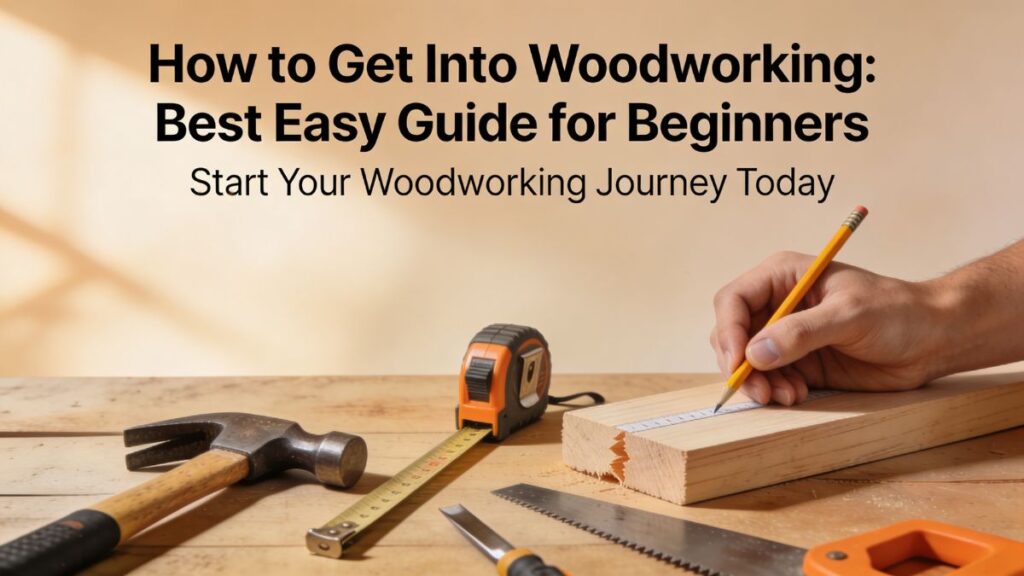
Hand saw – You can get a decent one for under $15 at Walmart or Home Depot. Or even better look for a second hand one at garage sales. Works just as good.
Measuring tape – Around $5 to $8. Very important. As the saying goes measure twice cut once.
Pencil for marking – Yes free basically. Always mark before you cut.
Sandpaper sheets – Around $5 for a pack. Multiple grits like 80, 120, 220.
Wood glue – Around $6 to $8.
Clamps (2 basic ones) – Around $10 to $15 for a pair.
Cordless drill (optional to start) – If budget allows around $35 to $50 second hand.
So honestly your total starting cost for how to start woodworking at home can be under $50 if you shop smart. I know right. Not as scary as you thought.
Later when you get more comfortable you can slowly add things like a jigsaw, circular saw, miter saw etc. But for first few beginner woodworking projects you really dont need all that.
Step 4: Choose the Right Wood to Start With
This is a very important point and not many guides talk about this clearly for beginners.
For someone figuring out how to get into woodworking the best wood to start with is pine. Pine is cheap, easy to cut, easy to sand, widely available at any Home Depot or Lowes near you. Yes it can scratch more easily than harder woods but for learning it is perfect.
Avoid oak, walnut, maple and other hardwoods when you are just starting. They are harder to cut and more expensive. If you mess up on a $4 pine board its okay. If you mess up on a $25 walnut board it hurts more. So start with pine.
Also when you go to the store to pick your wood look carefully at every board. Try to pick boards that are straight. Avoid any boards that are bent or twisted because warped wood is very difficult to work with especially for beginners.
One more thing. Wood moves. I mean it expands and contracts with weather and moisture. Many beginners dont know this and then their finished project cracks or splits after some months. Always let your wood sit in your workspace for a day or two before you start cutting. This helps it adjust to the humidity of your room.
Step 5: Start With Super Simple Beginner Woodworking Projects
Okay so you have watched some videos, you have your basic tools, you have your pine boards. Now what?
Start with the most simple beginner woodworking projects possible. I am talking things like:
A simple floating wall shelf – Honestly just one board, two brackets, done. Perfect first project.
A small wooden box – Four sides, a bottom, and a lid. Teaches you cutting, gluing, and assembly all in one go.
A phone stand or tablet holder – Simple angle cuts and you have a useful thing for your desk.
A basic step stool – Slightly more complex but very satisfying when done.
Dont try to build a full dining table or bookcase when you are just starting. Please. I made that mistake and got so frustrated I almost quit in the first week. Start small, feel the win, then move to bigger things.
You can also try beginner woodworking classes near me at your local community college or hardware store. Many Home Depots actually run free weekend workshops. These are great because you learn with tools already available and you get to ask questions in person.
If you want woodworking classes near me then search on Google, check Eventbrite, check your local library notice boards. Many communities in the USA have free or very cheap beginner woodworking classes near me happening every month.
Step 6: Learn Basic Safety Before Touching Any Power Tool
I have to say this clearly because it is very important.
When you are figuring out how to get into woodworking please please please learn safety rules before touching any power tool. Even a hand saw can cause a bad cut if you are not careful.
Basic safety rules for beginners:
Always wear safety glasses when cutting. Always. No excuses.
Wear a dust mask when sanding. Wood dust is not good to breathe in.
Keep your fingers away from the blade direction when cutting.
Never rush a cut. Slow steady pressure is better.
Always clamp your wood before cutting. Never hold the piece with your hand and cut with the other hand.
Keep your workspace clean. Sawdust on the floor can make you slip.
These might seem obvious but when you are excited and distracted it is easy to forget. Safety first always in how to get into woodworking.
Common Mistakes When You First Learn How to Get Into Woodworking
Oh man I could write a whole separate post about mistakes I made. But let me share the top ones real quick.
Buying too many tools too fast – Start small. Add tools as you need them for specific projects.
Skipping the measuring step – I cannot tell you how many times I just eyeballed a cut and it came out wrong. Always measure. Always mark.
Not sanding properly – Beginners often skip sanding or only sand once. Sand multiple times with different grits for a smooth finish.
Choosing wood that is too hard – Already mentioned pine is your friend at the start.
Not letting glue dry fully before moving pieces – I was impatient and messed up two joints because of this. Let it dry. Wait the full time on the bottle.
Trying complex joints too early – Simple butt joints are fine to start. Check out my detailed post on butt joint woodworking where I explain this in a simple way.
How to Get Into Woodworking at Home Without a Workshop
Yaar one of the biggest excuses I hear is “I dont have a workshop so I cant do woodworking.” Nonsense.
I started in a corner of my bedroom with a folding table. Seriously. You dont need a big garage or expensive workshop to learn how to start woodworking at home.
A balcony, a backyard corner, a garage space, even a big indoor room can work. Yes you will make sawdust. Yes you should cover things with plastic sheets. But you absolutely can do basic beginner woodworking projects in a small space.
If you want some real good advice on setting up a simple workspace without spending much, I wrote a whole guide on woodworking garage setup for beginners on a budget that might help you a lot.
Also many people in USA have their basements which are perfect. Good lighting, enclosed space, away from the main house.
If you are really tight on space even wood carving is something you can do sitting at your kitchen table. How to get into wood carving is actually much more beginner friendly in terms of space needed. Just a piece of wood, a chisel, a mallet, and some patience.
Where to Find Free Learning Resources for How to Get Into Woodworking
Okay apart from YouTube here are some places where you can learn how to get into woodworking for free or very cheaply:
YouTube channels – Look for channels that explain things slowly for beginners. Many are very good.
Reddit woodworking community – The r/woodworking and r/BeginnerWoodWorking communities are super helpful. People on how to get into woodworking reddit share their projects, mistakes, and tips all the time.
Woodworking for beginners pdf resources – Search Google for free beginner woodworking guides in PDF format. Many websites offer them completely free.
Library books – Your local library likely has woodworking books. Completely free to borrow.
Makerspaces – Many cities in USA have community makerspaces where you can use woodworking tools for a small monthly fee. Very budget friendly way to try before buying tools.
Pinterest – Great for visual project ideas and step by step plans.
One really good free place I personally send beginners to is Popular Woodworking where they have a whole section called “I Can Do That” made specially for people who are just picking up their first saw. All projects there are doable with a very small and basic set of tools. No expensive machines needed at all. I really like how they keep it simple and practical for beginners.
Also if you want something a little more structured then check out this beginner woodworking guide from Kreg Tool which walks you through tools, joints, and your first few projects in a very clean step by step way. I came across this when I was starting out and it helped me understand pocket holes without making my brain hurt. Ha.
How to Get Into Woodworking: Realistic Budget Breakdown
Let me give you a honest budget picture for how to get into woodworking in USA as a total beginner.
Starter Kit Option (Under $50): Hand saw $12, Measuring tape $7, Sandpaper pack $5, Wood glue $7, 2 basic clamps $14. Total around $45.
Basic Beginner Kit (Under $150): Above starter kit plus a second hand cordless drill $35, mallet $10, set of basic chisels $20, safety glasses and dust mask $12. Total around $150.
First Materials Cost: 2 to 3 pine boards from Home Depot or Lowes = around $15 to $25 depending on size.
So your very first project from scratch can happen for under $70 total. That is really not that expensive for a new hobby. Much cheaper than golf, painting, or most other hobbies people pick up.
Frequently Asked Questions About How to Get Into Woodworking
Can I learn how to get into woodworking with no experience at all?
Absolutely yes. All you need is some patience, a few basic tools, and simple project plans. Start small and skills will come with practice.
How long does it take to learn woodworking as a beginner?
You can build your first simple project in a weekend. Basic confidence usually comes after 3 to 5 small projects. Skills keep growing the more you practice.
Are woodworking classes near me worth it for beginners?
Yes if you find affordable or free ones they are very helpful because you get hands-on guidance. Check community colleges, local hardware stores, and library events for beginner woodworking classes near me.
What is the cheapest way to start woodworking at home?
Start with only hand tools, pine wood, and free YouTube tutorials. You can start for under $50 and work your way up as your skill and interest grows.
Final Thoughts: Just Start Today
Honestly the biggest thing stopping most people from learning how to get into woodworking is overthinking. They keep waiting until they have the perfect workshop, the perfect tools, the perfect time. But that perfect moment never comes yaar.
Just start. Get one hand saw. Get one pine board. Watch three YouTube videos. And make something. Even if it looks bad. Even if the cut is not straight. Even if you have to redo it.
Every single expert at how to get into woodworking was once a confused beginner staring at a piece of wood not knowing what to do. Just like I was. Just like you are maybe right now.
How to get into woodworking does not require a big budget. It does not require experience. It does not require a fancy workshop. It just requires you to start. Pick up that saw and make your first cut today. You will thank yourself later. Promise.
If you are ready to take your first steps in how to get into woodworking then explore more beginner guides and project ideas right here at easydiywood.com. Happy woodworking friends!