
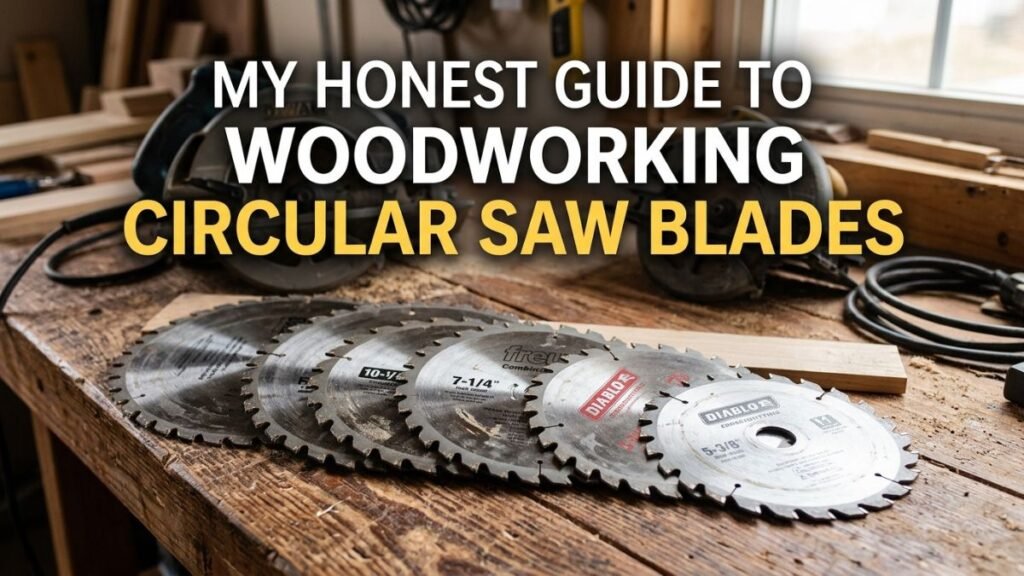

Hello friends, Udit here from Easy DIY Wood.
So few weeks back one reader messaged me, he said Udit bhai I bought a circular saw but which blade should I use, the one that came with it is not cutting clean at all. This question about woodworking circular saw blades I get almost every week now, no joke.
When I started my own woodworking journey, I also had zero idea about woodworking circular saw blades. I just picked whatever blade was cheap at local hardware shop, thinking blade is blade only, what difference it can make right. Big mistake friend, big big mistake.
Wrong blade burned my wood, splintered my plywood edges badly, and it also made my saw motor work harder then it should. Only after wasting money on 3 or 4 wrong blades I understood something simple, the blade matters more than the saw itself sometime.
In this post I want to explain woodworking circular saw blades in very plain words, no heavy technical talk, just like I am sitting with you having chai and telling what I learned by making mistakes. This is for complete beginners who dont want to waste money, so budget friendly options only, that is promise from my side.
What Exactly Is a Woodworking Circular Saw Blade
Basic thing first, lets get this clear. A circular saw blade is that round, flat, spinning disc with sharp teeth on the edge, it fits onto your saw and this is actual part doing all the cutting work.
Your saw is just motor and handle honestly, the woodworking circular saw blades are the ones doing real job here. That is why picking right blade matters more then which saw brand you go for.
Many beginners spend whole budget on fancy saw and then just use cheapest blade that came free in the box. This is backward thinking if you ask me, a good blade on average saw always gives better result than average blade on expensive saw, I have seen this myself.
If you are still figuring out your whole setup and dont know where to even begin, I actually wrote a detailed post on how to start woodworking with low budget which covers tools and blades together, might help before you spend money on anything.
Parts Of Woodworking Circular Saw Blades You Should Know
Dont worry, you dont need to memorize like some mechanical engineer student, just few basic things is enough to understand woodworking circular saw blades properly as beginner.
Teeth are those small pointy things on the edge, they cut into wood directly.
Gullet is gap between two teeth, wood dust and chips escape from here while cutting happens.
Kerf means how wide a cut the blade makes. Thin kerf woodworking circular saw blades remove less wood material and put less load on saw motor, which is great thing if you own budget cordless saw like most beginners do.
Arbor hole is hole in center of blade, this fits onto saw shaft. Always check this size matches your saw, or blade simply wont fit, that simple only.
I remember buying a blade once without checking arbor size properly and it just sat unused in drawer for months since it did not fit my saw at all. Learn from my mistake please, dont repeat what I did.
Types Of Woodworking Circular Saw Blades Explained Simple
This part confused me most when I was new to all this, so let me break down plain and easy for you.
Rip cut blades have fewer teeth, somewhere around 16 to 24, big gaps between them. These are made for cutting along wood grain, means cutting long board into narrow strips. They cut fast honestly but finish comes out little rough.
Crosscut blades opposite of rip blades, more teeth usually 60 to 80, smaller gaps between. These cut across grain and gives much smoother, cleaner finish. Good for trim work or anything needing neat look.
Combination blades have around 40 teeth roughly, and this is what I recommend every single beginner reading this. It does both rip and cross cuts reasonably okay, so you dont need switching blades again again or buying multiple woodworking circular saw blades when just starting out and money is tight situation.
Plywood or fine finish blades have higher tooth count, sometimes 80 plus teeth, made for very clean cuts on plywood, veneer or laminate where you dont want any splintering on edges.
Honestly if you ask me, for complete beginner on budget, just buy one good combination blade first only. Dont go buying 4 different woodworking circular saw blades in first month itself like I did, total waste of money that was, still regret it little bit.
Tooth Count, The Simple Rule I Wish Someone Told Me
Okay here is rule that took me way too long figuring out, but once understood, choosing woodworking circular saw blades became so much more easy for me.
Less teeth means faster cutting but rougher finish comes out.
More teeth means slower cutting but much smoother, cleaner finish.
Thats really it friend, thats whole logic behind tooth count business. For general home wood work, something around 40 tooth range works fine for almost everything a beginner will attempt, cutting boards, small shelves, basic furniture pieces at home.
My Honest Budget Pick For Beginners
Now this is probably what you actually came here searching for, so let me be straight and direct about it.
For someone just starting, I always suggest getting 7 and 1/4 inch, carbide tipped, 40 tooth combination blade. This size fits most standard circular saws sold across USA, price stays reasonable, and handles like 80 percent of beginner wood projects without much issue at all.
You genuinely dont need most expensive blade sitting on shelf when starting out fresh. I have used mid range carbide woodworking circular saw blades that performed just as good as pricier ones for basic home projects, difference only shows up when doing very fine furniture work at professional level.
If you are also setting up whole workshop on tight budget like I did, my garage setup guide for beginners covers tools beyond just blades too, might help you plan everything smartly without overspending.
Carbide Tipped Or HSS, Which One Should Beginners Pick
You will see two main materials shopping for woodworking circular saw blades, carbide tipped and HSS meaning high speed steel.
HSS blades cheaper upfront yes, but they go dull pretty fast and dont handle hardwood well at all in my experience.
Carbide tipped blades cost little more initially, but they stay sharp much longer, cut cleaner overall, and honestly work out cheaper in long run since you are not replacing them every few weeks like HSS ones.
For beginner I would say just spend little extra and get carbide tipped, it genuinely pays off with time. I checked this Lowe’s circular saw blade buying guide once and it also confirms same thing, cheap steel blades just dont last as long as carbide ones do.
Checking Blade Size Matches Your Saw Properly
Before buying any woodworking circular saw blades, please check what size your own saw actually takes first. Most handheld circular saws use either 6 and half inch or 7 and quarter inch blades, this info usually printed right on saw body itself or inside manual booklet.
If your saw is smaller compact type, it might need 4 and half or 5 and 3/8 inch blade instead of standard size. Same logic goes for miter saw owners too, blade size and arbor size both need matching exactly or it simply wont fit safe.
I actually cover saw and blade compatibility more deeply in my miter saw for woodworking guide if you are deciding between circular saw and miter saw for your home projects, worth checking that before spending money on anything new.
Common Mistakes Beginners Make With Circular Saw Blades
Let me just list what I personally messed up, maybe this saves you some money and headache too.
Using fine finish blade for rough framing cuts, this just slows you down for absolutely no reason.
Not checking arbor hole size before buying, blade simply wont fit, pure waste of money then.
Buying cheapest blade possible thinking price dont matter much, it does matter actually, cheap woodworking circular saw blades often warp or go dull within few cuts only.
Forgetting blade spins one direction only, installing it backward gives terrible and dangerous cuts, very risky mistake this one.
Using blade way past its life just to save few bucks, this actually damages saw motor over time and honestly its not safe either way.
Safety Bit, Please Dont Skip This Part
I am not going to lecture too much here but this part really matters friends.
Always unplug saw before changing blade, sounds obvious but people forget this all the time.
Wear safety glasses, wood chips fly fast and it hurts badly if goes in your eye, trust me on this one.
Check blade guard working properly and not stuck open somewhere.
Never force a blade that dont fit smooth onto arbor, if needs excessive force something is wrong there.
For more detailed official safety practice around handheld saws, this OSHA handheld circular saw safety page is worth quick read, especially if setting up first home workshop like many of us beginners are doing right now.
Making Your Blade Last Longer, Budget Tip
Since whole post is about budget friendly approach, here is something that saved me real money over time. Clean your blade regularly, simple as that.
Resin and pitch build up on teeth with time, this makes even sharp blade cut poorly and it looks dull even when actually its not dull. Simple soak in warm soapy water with soft brush removes most of this buildup easily.
I clean mine every few projects honestly and it extends blade life quite a lot, no need replacing so often this way.
When Should You Actually Replace The Blade
Some signs your woodworking circular saw blades need replacing soon, burning marks on wood even with correct speed, visible chipped or missing teeth, blade making unusual vibrating noise while cutting, or cuts becoming rough despite blade being cleaned properly already.
If you notice two or more signs together, its probably time getting new blade, dont push further for safety reason honestly.
Final Thoughts
Choosing right woodworking circular saw blades really isnt complicated once you understand basics, teeth count, kerf, material and matching to your saw size properly. I made plenty mistakes learning this myself, wasted money on wrong blades multiple times, but hopefully this guide saves you from doing same thing.
Start simple, get yourself one good carbide tipped combination blade first, learn how it performs on your projects, and only then think about specialized woodworking circular saw blades as your skill grows bigger. Thats honestly smartest, most budget friendly way for any beginner to begin this whole journey.
What blade are you currently using for your own projects, let me know in comments below, would genuinely love hearing what working for you.
FAQs
What is the best tooth count for beginner circular saw blade? A 40 tooth carbide tipped combination blade works nicely for most beginner projects, balances speed and clean finish well.
Can one blade cut both plywood and regular lumber? Combination blade handles both reasonably okay, though dedicated fine finish blade gives cleaner result specifically on plywood.
How often should I replace my circular saw blade? Depends on usage honestly, but watch for burn marks, chipped teeth or rough cuts, these signs mean replacement time.
Is carbide tipped blade actually worth it for beginners? Yes definitely, costs slightly more upfront but stays sharp longer and cuts cleaner, saves money over long run.