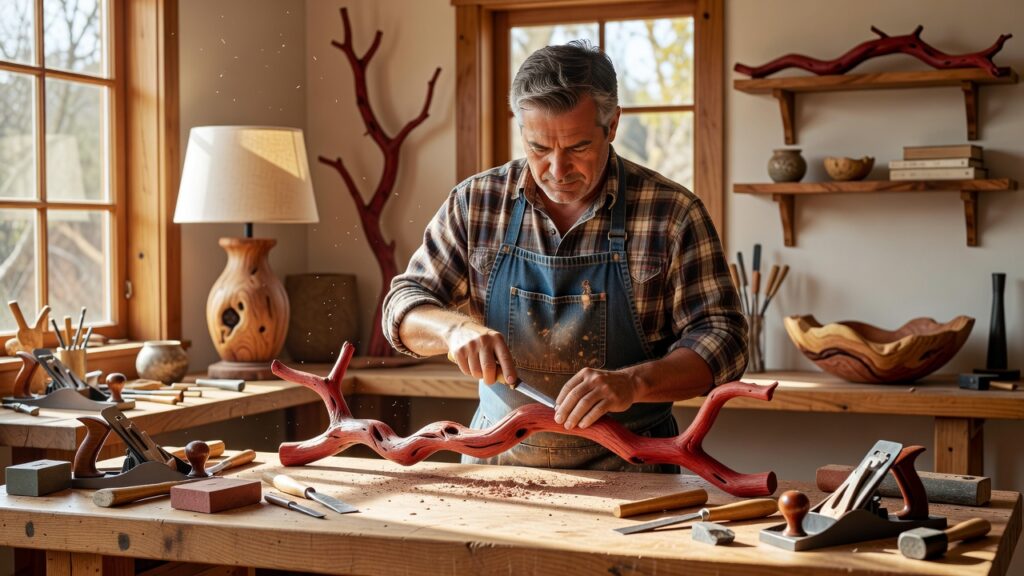

Manzanita woodworking opens up exciting possibilities for makers who want durable, visually striking results. This unique wood comes from native shrubs that thrive in western landscapes. Its dense grain and rich reddish tones make it stand out in both functional pieces and artistic creations.
However, many beginners overlook its special properties. Therefore, understanding these traits early helps avoid common mistakes. Additionally, proper preparation leads to smoother projects that last for years.
Meanwhile, homeowners continue discovering fresh ways to incorporate manzanita into renovations. Consequently, demand for reliable guidance keeps growing. Specifically, this guide covers fundamentals, step-by-step methods, and advanced tactics that deliver consistent success.
Core Fundamentals
Manzanita woodworking begins with recognizing the wood’s exceptional hardness and density. These traits provide excellent durability yet demand sharp tools and patience during cutting. Furthermore, the natural burl patterns create beautiful visual interest without extra staining.
Nevertheless, the wood can check or crack if dried too quickly. Therefore, gradual seasoning remains essential. Notably, many artisans compare it favorably to other hardwoods discussed in our honey locust woodworking post.
Additionally, manzanita accepts finishes beautifully once properly prepared. Conversely, its oily nature sometimes interferes with glue adhesion. Instead, light sanding and cleaning ensure strong bonds in every joint.
Manzanita woodworking making also requires attention to safety. Dust from this dense species can irritate lungs, so quality masks stay mandatory. Similarly, protective eyewear prevents injury from flying chips during aggressive shaping.
Step-by-Step Blueprint
Start your manzanita woodworking projects by selecting seasoned stock with minimal defects. Measure twice and mark clearly before any cuts. Subsequently, rough shape the pieces using a bandsaw fitted with a fine blade.
Next, refine the surfaces with progressive grits of sandpaper. Indeed, beginning at 80 grit and moving to 220 creates a silky finish ready for oil or lacquer. Furthermore, test your router techniques first on scrap to prevent costly errors.
For curved elements, consider referencing methods shared in our Japanese woodworking saw article. Consequently, precise hand tools complement power equipment when working intricate details.
- Secure the blank firmly in a vise.
- Draw your design lines with a sharp pencil.
- Remove waste material in small increments.
- Check progress frequently against your template.
Finally, apply a penetrating oil finish that highlights the natural color. This step transforms raw manzanita into a centerpiece worthy of any room.
Advanced Strategies
Experienced woodworkers elevate manzanita woodworking by combining it with contrasting species. For example, pairing it with lighter maple creates striking visual tension in tabletops and cutting boards. Moreover, incorporating epoxy fills voids and adds modern flair.
Nevertheless, scaling up to larger installations requires careful planning. Therefore, always account for seasonal movement even in this stable hardwood. Additionally, consider outdoor applications where manzanita excels due to natural resistance.
Meanwhile, tutorial videos from reputable sources like Wood Magazine demonstrate professional approaches. Similarly, consulting forestry resources from USDA Forest Service provides deeper insight into sustainable harvesting practices.
Ultimately, consistent practice refines your eye for grain and color. Consequently, each new manzanita woodworking home project becomes faster and more rewarding than the last.
Frequently Asked Questions
Yes, provided you start with smaller projects and sharp tools. The wood rewards careful technique, so beginners should practice on scraps first.
It offers superior density and unique burl patterns. However, it requires more patience during drying and finishing compared to softer species.
Absolutely. Its natural oils provide good weather resistance when properly sealed. Therefore, many makers choose it for garden features and exterior accents.
Penetrating oils and hardwax blends highlight the rich color beautifully. Additionally, multiple thin coats prevent blotching while preserving the wood’s natural texture.