
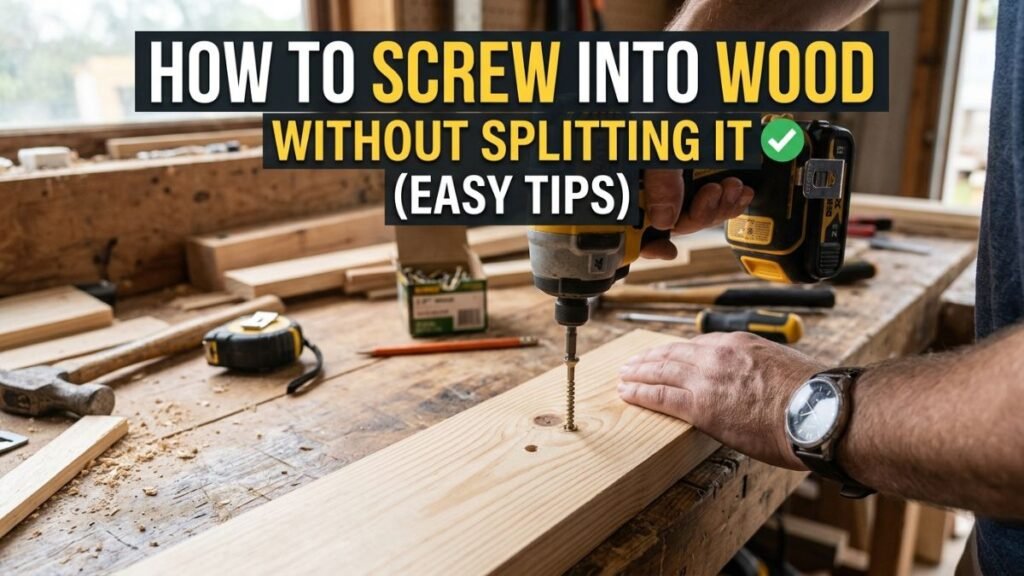

So basically, few months back I ruined almost 3 wood pieces just becoz I didnt know how to screw into wood without splitting it. Yeah, sounds silly na, but it happens with every beginner I think.
I am Udit Das, I run easydiywood.com, and trust me I am not some big carpenter or professional guy. I just love making small wooden things at home and I learn mostly by making mistakes, lots of mistakes actually.
If you are also searching how to screw into wood without splitting it, then dont worry, you landed at right place. This is not some fancy expert article, this is just me telling you what actually worked for me after breaking so many boards.
Why Does Wood Split When We Screw It (My First Bad Experience)
First time I tried screwing a plank for a small shelf, I just took the screw and pushed it straight with drill, no pilot hole nothing. And boom, wood cracked right there in front of my eyes.
Later I understood the reason. When you dont know how to screw into wood without splitting it, the screw actually works like a wedge. It pushes the wood fibers sideways instead of cutting through them nicely.
Think of it like this, imagine you are pushing a fat nail through a thin biscuit. The biscuit will break becoz there is no space for that nail to go smoothly. Same thing happens with wood, especially near edges or on hard wood types.
This is exactly why learning how to screw into wood without splitting it matters so much for beginners like us, becoz one wrong move and your whole project piece is gone.
What You Actually Need (Budget Friendly Approach)
You dont need some expensive tool kit for this, honestly. I am from India origin and I know budget matters a lot, so I always try budget friendly approach in my projects.
Here is basic stuff which is enough:
A simple hand drill or cordless drill (even a cheap one works fine)
Few drill bits of different sizes
Wood screws (normal ones, no need for fancy brand)
A pencil to mark the spot
Optional, a countersink bit if your budget allows
That is literally it. You dont need to spend big money to learn how to screw into wood without splitting it, this is honestly a budget friendly approach that any complete beginner can try at home.
If you also need proper clamping support while working, I actually wrote a small guide on budget woodworkers bench vise for beginners which really helps hold the wood steady, less wobble means less splitting too.
Step By Step, How To Screw Into Wood Without Splitting It
Ok now lets come to the real part. This is the exact method I follow now, and honestly it works almost every single time.
Step 1, Mark The Spot
Take pencil, mark where you want the screw. Sounds basic but many beginners skip this and screw goes crooked, which increases chance of split.
Step 2, Drill A Pilot Hole First
This is the most important step in how to screw into wood without splitting it. A pilot hole is just a small hole drilled before the actual screw goes in.
Why this works is becoz it removes some wood material first, so screw doesnt have to force its way through solid wood. Less force means less splitting, simple logic.
Step 3, Pick Correct Drill Bit Size
Your pilot hole bit should be little smaller than the screw’s core, not the threads, just the middle solid part. If you go too big, screw wont hold properly, if too small, wood still might crack.
Honestly this part confuses me even now sometimes, so I just hold the drill bit in front of screw and see if I can still see thread lines poking out on both side. If yes, size is roughly correct.
Step 4, Countersink If Needed
Countersinking means making small cone shaped dip on top so screw head sits flush, not sticking out. This step also helps prevent splitting near surface becoz head doesnt press hard against wood edges.
Step 5, Go Slow With Drill Speed
This one I learned hard way. When you go too fast, heat builds up and wood fibers get stressed quickly, this can cause cracking specially in hardwood.
Slow and steady really is the trick when you are trying how to screw into wood without splitting it, patience literally saves your project here.
Step 6, Try Soap Trick (Old But Gold)
My uncle actually told me this one, rub the screw threads on a bar of normal soap before driving it in. It reduces friction a lot.
I was doubtful first time but it actually works, screw goes in much smoother and wood doesnt fight back so much.
Simple Pilot Hole Size Chart For Beginners
I know numbers confuse beginners (they confuse me too ngl), so here is rough simple version, nothing too technical:
For small screws, use thin bit almost matchstick thin
For medium screws, use bit slightly thicker than half the screw width
For thick or long screws, always go one size bigger if wood is hardwood type
This chart is not 100% scientific perfect but for home DIY projects it works fine honestly, and its enough for anyone learning how to screw into wood without splitting it at beginner level.
Screwing Near Edges Or End Grain, Biggest Mistake
If you screw too close to the edge of a board, wood will almost always crack, doesnt matter how careful you are otherwise.
General rule I follow now, keep screw at least half inch away from any edge. And avoid screwing straight into the end grain (that cut side where you see circle rings), becoz that part splits super easily.
Honestly this single mistake caused most of my early failures before I properly learned how to screw into wood without splitting it near tricky spots like corners and thin edges.
What To Do If Wood Already Split (Dont Panic)
Ok so sometimes even after all this, wood still cracks a little, it happens, dont feel bad. I have been there many times.
Small fix, take some wood glue, push it into crack, clamp it tight for few hours. For bigger crack, wood filler or a small dowel plug also works nice.
If you want proper details on different fasteners and which one suits which wood type, I actually covered that deeply in my woodworking fastener guide for beginners, might help you pick better screw next time so you avoid this mess altogether.
My Honest Mistakes And What I Actually Learned
Ok real confession time. I used to think pilot hole is just extra unnecessary step, waste of time basically. I was so wrong.
One time I skipped it on a nice pine board for a small box project, and split ran almost 4 inches long, whole board wasted, money wasted too.
After that day I never skip pilot hole step, ever. This is honestly the number one lesson in how to screw into wood without splitting it, dont get lazy, that 10 second step saves your whole project.
Also I learned dont force the drill. If screw feels stuck or hard, stop, back it out little, maybe make hole bit bigger. Forcing it just cracks wood more, trust me on this one.
Budget Friendly Tips For Complete Beginners
Since I always talk budget friendly approach on my blog, here few more cheap tricks:
Reuse old screws if they are still straight and not rusted
Buy a cheap multi size drill bit set instead of single bits, cheaper overall
Use normal soap instead of buying special wax lubricant
Practice on scrap wood pieces first before touching your actual project
According to a helpful guide by Lowe’s on drilling pilot holes, predrilling really does prevent splitting and also stops the drill bit from wandering off the mark, which matches exactly what I learned through my own trial and error too.
There is also good technical info on Wikipedia’s pilot hole page if you want to understand the wedge effect science bit more deeply, though honestly for beginners the practical steps matter more than theory.
Quick Recap Before You Start
Learning how to screw into wood without splitting it is not some rocket science thing honestly, its just few small habits.
Mark spot, drill pilot hole, pick correct bit size, countersink if needed, go slow, and maybe try that soap trick. That is basically whole secret.
I still mess up sometimes even now, not gonna lie, but way less than before. And every mistake taught me something new about how to screw into wood without splitting it properly.
Frequently Asked Questions
Do I really need a pilot hole every single time? Mostly yes, specially near edges or hardwood, it saves you from splitting almost always.
What size pilot hole should beginners use? Slightly smaller than screw’s solid core, not the threads, just enough for screw to grip nicely.
Does soap actually stop wood from splitting? Yes it reduces friction a lot, screw goes in smoother and wood fibers stress less.
Why does wood always split near the edge? Becoz there is less wood material there to absorb the outward pushing force of the screw.
Final Thoughts
Honestly if you take just one thing from this whole article, let it be this, always drill that small pilot hole first. Seriously, that alone solves like 80 percent of splitting problems.
I hope my honest mistakes and simple budget friendly tips helped you understand how to screw into wood without splitting it better than those complicated technical articles out there.
Go grab some scrap wood, practice little bit, and you will get comfortable soon. And hey, if you crack a board or two while learning, dont worry, I did that too, lots of times actually.
Happy building, and take care of your fingers too while drilling okay.


Pingback: DIY Coffee Table Legs Woodworking: My Honest Beginner Story