
Ok so funny story. My first ever trip to hardware store for buying a woodworking fastener was a total disaster. Like I am not even joking. I stood there for 40 minutes staring at rows and rows of screws, nails, bolts and god knows what else. Ended up buying a bunch of random stuff that cost me around 50 dollars. Used maybe 10 dollars worth. Rest is still sitting in a box in my garage collecting dust.
That was 3 years back. And honestly thats why I am writing this today because I dont want you to do the same stupid thing I did.
My name is Udit, I run easydiywood.com and I have been messing around with wood projects at home for a while now. Not a proffesional or anything. Just a regular guy who likes making things with wood on weekends.
So What Even is a Woodworking Fastener
You know whats funny, I was doing this hobby for like 6 months before I even knew the word fastener. I just used to say “that screw thing” or “the nail thingy” haha. But basically right, a woodworking fastener is anything that joins two pieces of wood together. Thats the whole thing. Nothing fancy about it.
Could be a screw. Could be a nail. Could be a bolt or a little wooden peg called dowel. Even glue technically holds wood together but people dont usually count that as a fastener.
Now the confusing part. And this is where I struggled alot. Not every fastener works for every situation. Like you cant just grab any random screw and expect it to work perfectly on every wood type. Some are ment for softwood, some for hardwood, some only for outdoor stuff. I learnt this the hard way when my garden shelf fell apart after 2 months because I used indoor screws outside. Ugh.
All the Woodworking Fastener Names I Wish Someone Told Me Earlier
When I was starting out nobody gave me a simple list of what is what. So I am gonna try to do that for you. But fair warning, I might ramble a bit because thats just how I talk haha.
Wood Screws
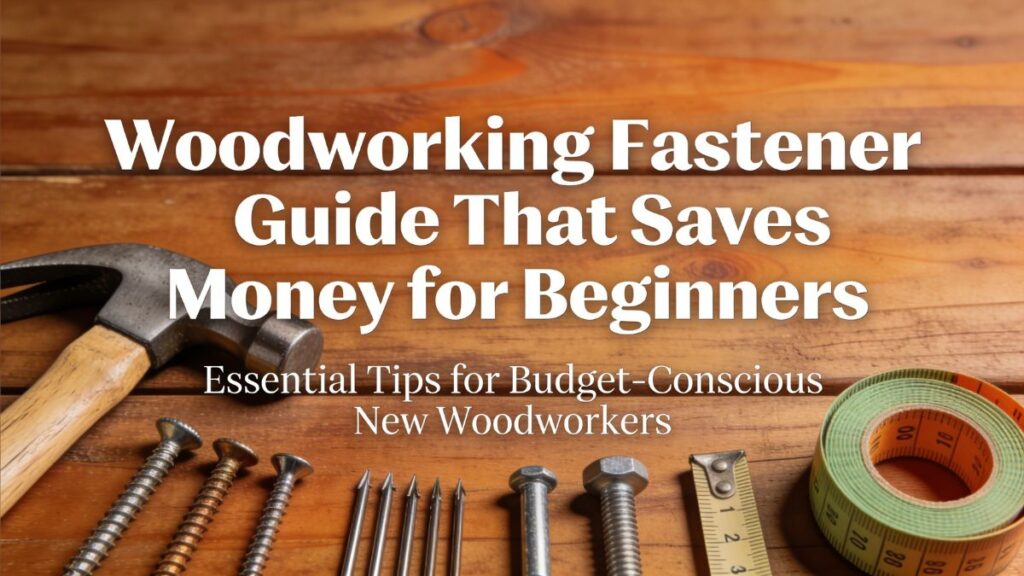
These are like the bread and butter of woodworking. You will use them more than anything else. They got sharp pointy tip and spiraly threads that grip into wood really nice. The best thing about screws? If you mess up, just unscrew it and try again. For someone like me who makes mistakes every other day, this is a lifesaver.
I use them for basically everything. Shelves, small tables, cabinets, you name it.
Nails
Nails are old school. Like really old school. Your dada probably used them, my dada definitely used them. They are super cheap and you can hammer them in quick. But honestly speaking, they dont hold as tight as screws do.
I keep nails around for when I am doing something temporary or just need quick fix. For real furniture that I want to keep for years, nails alone wont cut it for me.
Bolts with Nuts
Ok so when you need something REALLY strong. Like seriously strong. Bolt and nut combo is the way. They clamp wood pieces together so tight that nothing is moving.
I used carriage bolts for my outdoor bench last summer. That thing is heavy, people sit on it everyday, and its still rock solid. Carriage bolts got this smooth round head that looks pretty clean too. Lag bolts are the other type I sometimes use for heavy duty stuff but they are kinda overkill for most beginer projects.
Dowels
Oh man I love dowels. These are small round wooden sticks basically. You drill matching holes in both wood pieces, stick the dowel in with some glue, press them together and boom. Invisible joint. No metal showing anywhere.
The first time I made something with dowels, I was like wait where did the joint go?? It looked like one solid piece of wood. That feeling was so satisfying I cant even tell you.
You do need a dowel jig tho. Without it getting the holes lined up properly is a nightmare. Trust me I tried doing it freehand once. Never again.
T Nuts
Haha ok quick side story. My cousin was doing a crossword puzzle, I think it was the New York Times one, and the clue said something about woodworking fasteners. The answer was TNUTS. He called me asking what is a tnut and I felt so proud that I actually knew something haha.
But seriously T nuts are really usefull especially for furniture you want to take apart and put back together. Like if you move houses often or something. They got these little claw things that dig into the wood and you can bolt into them again and again.
Pocket Hole Screws
Game changer. Absolute game changer for me. So these screws go in at an angle right, and the hole is hidden on the backside or underside of your project. Nobody sees it from front.
You need a pocket hole jig which costs some money but its a one time buy. I got mine like 2 years ago and I use it in almost every project now. For making things like side tables, bookshelves, frames, its just perfect.
Which is the Best Woodworking Fastener When You Got No Budget
Real talk. When I started I had very limited money for this hobby. Like I couldnt go buying every type of fastener out there. So what I did was, I figured out the bare minimum I needed and stuck with that.
And you know what, you really only need 3 things to start.
Number one, a box of regular wood screws. Get two sizes maybe. Like 1 inch for thin stuff and 2 inch for thicker joints. One box of each. That covers most beginer projects honestly.
Number two, some brad nails. These are thin little nails that wont split your wood. Great for delicate work.
Number three, wood dowels plus wood glue. This combo gives you clean invisible joints and it costs almost nothing.
Grand total? Around 10 to 15 dollars max. Thats literally it. You dont need those expensive specialty metal fasteners for wood when you are just learning. Build your collection over time as your projects get bigger and more complex. I added stuff to my kit slowly over 2 years and thats perfectly fine.
Metal Fasteners for Wood and Do You Really Need Them
So this depends right. Like it depends on what you are making and where its gonna be kept.
Indoor projects? Regular zinc coated screws work totally fine. Your bookshelf inside your room doesnt need stainless steel bolts. Thats just spending money for no reason.
But outdoor projects? Thats a different game altogether. Rain, sun, humidity, all of this destroys regular steel fasteners fast. I am talking rust spots within weeks sometimes. You absolutely need either galvanized or stainless steel fasteners for anything going outside.
I made this mistake with a small plant stand for my balcony. Used regular cheap screws. Three months later, ugly rust stains all over the wood. Had to throw it out and start fresh. Waste of time and money and wood. Still hurts thinking about it honestly.
So my rule now is simple. Indoor project means regular screws. Outdoor project means spend extra on rust proof metal fasteners for wood. No exceptions.
How Do You Even Know What Size Fastener to Get
Dude this confused me for the longest time. I used to just eyeball it and hope for best. Sometimes it worked, most times it didnt.
Then somebody told me this simple trick and everything clicked. Your screw should go into the bottom piece of wood at least half its thickness. So like if bottom piece is 2 inches thick, the screw needs to penetrate at least 1 inch into it.
So you measure your top piece thickness, add half of bottom piece thickness, thats your screw length. Simple right? I wish I knew this from day one.
And one more thing. If your screw is too long and it pokes out from other side? So embarassing. Happened to me on a shelf I was making for my mom. She saw the screw tip poking out the bottom and gave me that look you know haha.
Hiding Your Wood Furniture Fasteners for Clean Look
Nobody wants ugly screw heads visible all over their nice furniture piece. I definately dont. So over time I picked up few tricks for keeping things looking neat.
Dowels are your best freind for invisible joints. I already told you about them but seriously they make such a big diffrence in how your final piece looks. I made a chess board project recently using only dowels for joining and people genuinely thought I bought it from some fancy store. That compliment made my whole week.
Pocket hole screws on the back or bottom where nobody looks. Simple but effective.
And if you absolutely have to put a regular screw somewhere visible, get wood plugs or caps to cover the head. They come in different wood colors too. Very cheap, maybe 2 dollars for a pack, and the diffrence is night and day.
The whole point of understanding wood furniture fasteners properly is so your finished project looks intentional and crafted. Not like someone just jammed screws in everywhere randomly. Which is what my early projects looked like but we dont talk about those haha.
Mistakes I Made With Woodworking Fasteners So You Dont Have To
Oh boy where do I even start.
Skipping pilot holes. This is the big one. I know I know, drilling a pilot hole feels like extra uncessary step. But when your wood splits right down the middle because you drove a screw without pilot hole? That pain is real. Hardwoods specially will punish you for this. Now I always always predrill. No shortcuts.
Tightning screws too much. I had this habbit of turning the screw until it absolutely wont turn anymore. Bad idea. The wood cracks, the screw head strips, sometimes the whole joint gets weak. When it feels snug, just stop. Dont force it.
Wrong fastener for wrong place. I already told you my outdoor plant stand story. But I also once used tiny brad nails trying to hold together a heavy picture frame. It fell off the wall in 2 days. Matching the right woodworking fastener to the job is so important and I learnt it through many failures.
Buying the absolute cheapest screws. Budget freindly doesnt mean buy the worst quality available. Those super cheap screws with soft metal? Their heads strip out so easy its frustrating. Get decent mid range stuff. Still affordable but actually works properly.
My Actual Fastener Kit That Goes Everywhere With Me
After 3 years of figuring stuff out, my everyday kit has become pretty lean. No unnecessary things.
Number 8 by 1.25 inch wood screws. Number 8 by 2 inch wood screws. Some 18 gauge brad nails. Couple packs of 3/8 inch dowels. Matching drill bit for the dowels. Titebond wood glue, the yellow bottle one. And maybe 4 or 5 carriage bolts just in case.
This covers like 90 percent of things I make. The whole kit cost me about 25 to 30 dollars and its been going for a long time now. I just refill what runs out.
If you are someone whos just getting into this and looking for easy projects that can even earn you some extra cash, this basic kit is honestly more than enough to get rolling.
Quick Guide on Types of Furniture Fasteners and When to Use What
Alright I am gonna keep this super short because I know this post is getting long already.
Screws for most furniture work. Strong, removable, versatile. Your go to choice basically.
Nails for quick stuff and framing. Fast but not the strongest for furniture.
Bolts for heavy duty things like bed frames and outdoor benches. Overkill for small projects.
Dowels when you want that clean look with no visible metal. Takes bit more effort but result is worth it.
T nuts for furniture you assemble and disassemble often. Think modular type furniture.
Pocket hole screws for hidden clean joints. Needs a jig but totally worth the investment.
Every woodworking fastener type has its purpose. You dont need to master all of them right away. Just start with screws and dowels and expand from there. Thats exactly what I did.
Where I Buy My Fasteners Without Overspending
Local hardware shop is your best bet for getting stuff quick and cheap. You can see and feel the fasteners before buying which is nice specially when you are new.
Online works great too honestly. Amazon has good variety and you can read reviews from other woodworkers. Home Depot also ships fast and their store brand fasteners are decent quality for the price.
One tip that saves me money every time. Buy in boxes not in small packs. A box of 100 screws is so much cheaper per piece than buying 10 loose ones. And belive me you will always need more screws than you planned for. Always.
FAQs About Woodworking Fasteners
What woodworking fastener do most people use?
Wood screws are the most common choice for nearly every kind of project whether its small craft or big furniture build.
What is the answer to woodworking fasteners in NYT crossword?
The answer is usually TNUT or TNUTS depending on how many letters the puzzle needs.
Can nails work instead of screws for making furniture?
They can technically but screws give much better holding power so for lasting furniture always go with screws.
Which are the cheapest woodworking fasteners available?
Regular wire nails are cheapest but spending slightly more on basic wood screws gives way better results for furniture.
Should I always make pilot holes before driving screws?
For hardwood absolutely yes always. For softwood you can sometimes get away without it but I still recomend predrilling every time.
What fastener is best for outdoor wood projects?
Go with stainless steel or galvanized options that resist rust because regular steel will corrode fast outside.
Final Thoughts From My Side
Look I could go on and on about woodworking fasteners because honestly once you start understanding them your whole woodworking experience changes. Its like suddenly everything makes more sense. Why this joint failed, why that shelf is wobbly, why that outdoor table got ruined.
Everything connects back to choosing the right woodworking fastener for the right job. And the beautifull part is you dont need to spend lots of money learning this. Start small, use basic stuff, make some mistakes (you will, we all do), and keep going.
Three years ago I didnt know difference between a brad nail and a finish nail. Now I can look at a project and tell you exactly what types of furniture fasteners it needs. Not because I am smart or anything. Just because I kept doing it and kept learning.
So yeah thats everything from my side today. If you got questions about which woodworking fastener to pick for your project just drop a comment below. I reply to everyone. Or just come hang out at easydiywood.com where I keep posting new stuff for beginers like us.
Go make something awesome with your hands. And please please drill your pilot holes.