
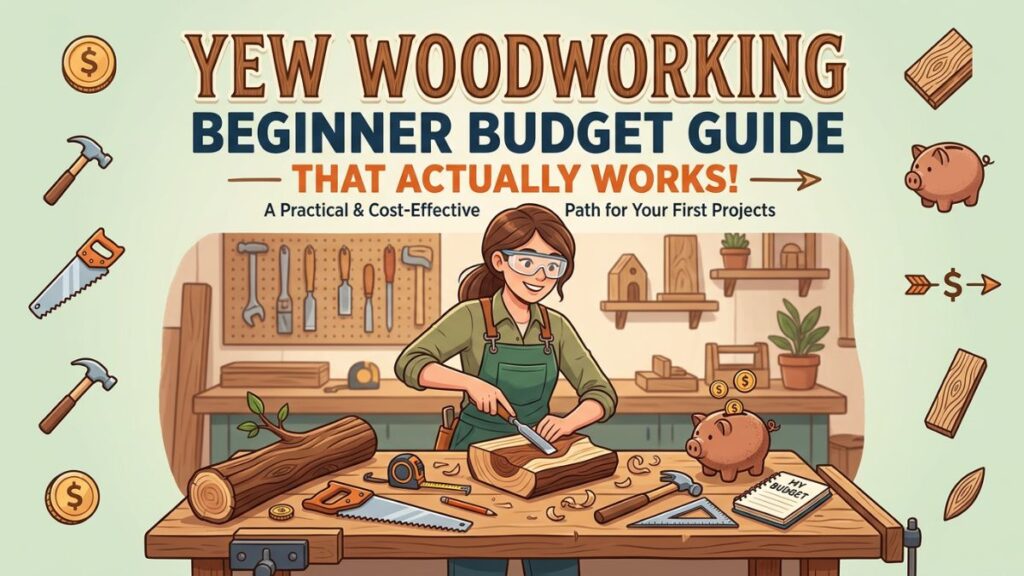

Hey freinds, its me Udit Das from easydiywood.com and today I want to talk about something that I was honestly scared to try at first. Yew woodworking. Yeah you read that right. I know I know, many of you must be thinking why yew wood? Its expensive na? Its toxic na? But trust me once you understand this wood properly, yew woodworking becomes one of the most rewarding things you can do in your home workshop. And yes even on a tight budget.
So let me tell you how I got into this whole yew woodworking thing. About 8 months back my freind who lives in Oregon told me he found some Pacific yew logs that were just sitting in a burn pile near his property. Nobody wanted them. He shipped me few small peices and when I opened that box, the colour of that wood just blew my mind. Like a warm golden brown with these reddish streaks running through it. I just stood there looking at it for like 10 minutes honestly.
What is Yew Wood Anyway
Ok so before we go deep into yew woodworking lets first understand what is yew wood actually. Yew wood comes from the yew tree which is a conifer known for its dark green needles and bright red berries. Now here is the intresting part. Most people think conifers give you soft weak wood right? But yew is completly different. Its actually one of the hardest softwoods you will ever come across and thats what makes it so unique and special.
There are mainly two types you will hear about. European yew which is called Taxus baccata and Pacific yew which goes by Taxus brevifolia. Both are prized by woodworkers for their quality and beauty. Pacific yew woodworking is what most people in USA can access more easily. The European one is mostly found in well, Europe obviously. But both are fantastic for yew woodworking projects.
The colour of this wood is just something else yaar. Yew wood typically has a warm rich tone that goes from pale yellow or light cream all the way to reddish brown. The heartwood is usually a deeper reddish brown while the sapwood tends to be lighter almost creamy or pale yellow. This natural contrast is what makes yew woodworking projects look so stunning even without fancy finishing.
Where is Yew Wood Found
Now this is the question everyone asks me. Where is yew wood found and where can I buy it without going bankrupt? Good question.
Yew isnt found everywhere. It grows in various parts of the world including Europe, North America and parts of Asia but commercially usable stands are actually quite rare. In the USA, Pacific yew grows mostly in the Pacific Northwest region. States like Oregon and Washington are where you will find it mostly. The yew tree itself is not a very common tree and thats why the wood costs more than your regular pine or oak.
But here is my budget tip for you. Dont go looking for yew at regular lumber yards. Most of them dont even stock it. Instead contact local arborists and tree removal companies. Many times when they cut down yew trees for landscaping work they just throw the wood away or burn it. You can get some really good peices for almost nothing this way. I got my first batch exactly like this.
Another option is online speciality wood sellers. Pacific yew typically sells for about $8 to $16 per board foot. Now that might sound expensive but remember you dont need large amounts for beginner yew woodworking projects. A small peice can go a long way when you plan your cuts smartly.
Is Yew Wood Expensive and How to Save Money
Lets be real here. Is yew wood expensive? Yes it is compared to common woods like pine or poplar. Yew trees grow notoriously slow. It can take decades even centuries for a yew tree to reach a size suitable for milling. This slow growth rate naturally limits the supply.
Yew is also relatively uncommon and larger tree trunks are usually hollow. The sizes available are somewhat limited and most trunks are also full of knots which means high waste factor for many projects. Though you can sometimes find sections of wood at moderate prices the overall cost of usable wood tends to be on the higher side.
But wait dont get discouraged. The whole point of this yew woodworking guide is to help you do it on a budget. Here are my personal tips that I use:
Start with small offcuts instead of full boards. Many online sellers have small peices and offcuts for much less money. Use these for your first yew woodworking projects.
Buy rough sawn wood. Its always cheeper than planed and finished boards. You can do the planing yourself at home.
Look for peices with character. Knots and natural edges in yew actually look beautifull. What other people reject, you can turn into amazing art.
Check local woodworking forums and community groups. Sometimes people sell yew wood for sale at really good rates because they have extra stock from old projects. Facebook marketplace is also a goldmine for this if you know how to search properly.
Yew Woodworking Projects for Beginners on Budget
Ok now the fun part. What can you actually make with yew wood as a beginner? Let me share some yew woodworking projects that I have done myself and they didnt cost me much at all.
Small Jewellery Box
This was my very first yew woodworking project and honestly I was nervous. I used a small offcut that was about 6 inches by 4 inches. The grain on that peice was just gorgeous. I made a simple hinged box with just basic hand tools. No fancy machines needed. The total cost? Around $12 for the wood and $5 for the small brass hinges. Thats it.
Pen Blanks and Turned Items
If you have access to a small lathe or know someone who does then yew pen blanks are amazing. Yew is actually an easy wood to work with and it glues, finishes and turns really well. The colours that come out when you turn yew on a lathe are just unbelievable. You can sell these pens for $30 to $50 each at craft fairs too. So your yew woodworking hobby can actually make you money.
Walking Stick or Cane
If you can get a longer branch of yew this is a fantastic project. The wood is naturally strong and bendy which makes it perfect for walking sticks. My uncle loved the one I made for him. I stripped the bark, dried it slowly and applied a simple oil finish. Cost me literally $0 because the branch was free from a tree removal job.
Small Picture Frame
Another great beginner yew woodworking project. You only need thin strips of wood and some basic mitre cuts. The warm colour of yew makes any photo look special inside it.
Cabinet Handles or Drawer Pulls
Now this is something many people overlook. You can make beautifull custom handles from tiny peices of yew wood. Yew is actually an excellent choice for cabinet details. Even small scraps that seem useless can become stunning drawer pulls. And you know what, if you are building a nightstand on budget you can add these yew handles to make it look super premium.
Safety First When Doing Yew Woodworking
Ok this is very very important and I cannot stress this enough. Although severe reactions are quite uncommon, yew has been reported as an irritant by many woodworkers. The most common reactions include eye, skin and respiratory irritation as well as nausea, headache and in rare cases cardiac effects. Additionally nearly all parts of the yew tree are considered toxic and poisonous to humans.
Now dont panic ok? People have been doing yew woodworking for thousands of years. Many experienced turners have been working yew for decades without any serious problems. But you need to be smart about it.
Always wear a proper dust mask. Not those cheap paper ones from the hardware store. Get a proper respirator that filters fine particles. Trust me this is not the place to save money.
Work in a well ventilated area. If you are sanding yew wood the fine dust can irritate your lungs and eyes. Open your windows, use a fan, or better yet work outside when the weather allows.
Yew wood is generally not considered food safe because the tree contains toxic compounds called taxines. It is not recommended to use yew wood for items that come into direct contact with food such as cutting boards, bowls or utensils.
So remember no spoons no bowls for food no cutting boards from yew. Keep your yew woodworking projects limited to decorative and non food items. Jewelry boxes, picture frames, handles, pens, carvings these are all perfectly fine.
Wash your hands properly after handling yew wood. Specially before eating anything. And if you get splinters take them out quickly. Yew produces some of the longest finest and sharpest slivers you will ever encounter. I learnt this the hard way trust me.
What is Yew Wood Used For Through History
This is actually the part that got me really intrested in yew woodworking. The history of this wood is just fasinating.
One of the worlds oldest surviving wooden artifacts is actually a yew spear head found in 1911 at Clacton on Sea in Essex England. We are talking about an artifact that is around 400,000 years old! Can you beleive that?
But the most famous use of yew wood has to be longbows. Perhaps the greatest claim to fame for yew is its incredible mechanical properties. The wood is flexible yet strong making it ideally suited for archery bows. English longbows made from yew wood literally changed the outcome of wars in medieval times. The trade of yew wood to England for longbows was so massive that it depleted the stocks of good quality mature yew over a huge area.
Today yew woodworking has moved beyond weapons obviously. Common uses include bows for archery, veneer, cabinetry, furniture, carvings, musical instruments like lutes, and turned objects. The wood has also been used in boat building and even in medicine. The Pacific yew bark contains a compound called Taxol which is used in cancer treatment. Pretty amazing right?
Tips for Working With Yew Wood as a Complete Beginner
Let me share some practical tips that I wish someone told me before I started yew woodworking.
Let the Wood Settle
Yew will warp split and crack very easily if you dont handle it right. It needs very careful slow seasoning. When you get your yew wood dont rush into cutting it. Let it sit in your workshop for atleast 2 to 3 weeks so it can adjust to the humidity and temperature of your space.
Use Sharp Tools Always
This is true for any woodworking but specially for yew. Dull blades will tear the grain and waste your expensive wood. Sharpen your chisels, plane blades and saw teeth before starting any yew woodworking project. If you need help picking the right machines for your workshop check out this guide on woodwork machines for beginners.
Go Slow With Cuts
Yew has this thing where the grain can change direction suddently. What I do is I make light test cuts first on scrap peices to see how the grain behaves before committing to the actual workpeice.
Oil Finish Works Best
For yew woodworking I honestly feel that simple oil finishes look the best. Boiled linseed oil or tung oil really brings out the warm colour of this wood. Using oil on yew also helps prevent cracking along the grain boundary lines. You dont need expensive lacquers or polyurethane. Keep it simple and natural.
Pre Drill Everything
Because yew can be brittle near knots you should always pre drill your screw holes. This prevents splitting and saves you from ruining your project at the last step.
Pacific Yew Woodworking vs European Yew
Many beginners ask me whats the diffrence between these two for yew woodworking. So let me explain quickly.
Pacific yew is what you will mostly find if you are in USA. This species is indigenous to the Pacific Northwest region. Its a bit smaller tree compared to European yew and the wood tends to be slightly lighter in colour.
European yew has been the traditional choice for centuries. Its a very hard, durable and decay resistant softwood that has been widely used for making quality bows and carvings. European yew is also known as common yew and English yew.
For beginner yew woodworking projects there isnt a huge diffrence honestly. Both are beautifull, both work well with hand tools, both need the same safety precautions. Just use whatever is available near you and fits your budget. Pacific yew woodworking is what I mostly do because I can source it more easily from contacts in the Pacific Northwest.
Can You Actually Make Money From Yew Woodworking
Short answer is yes. Absolutely yes.
Because yew wood is rare and special, items made from it sell for premium prices. I have seen simple turned bowls (decorative only, not for food) selling for $80 to $150 at craft shows. Pen blanks go for good money. Even small jewlery boxes from yew can fetch $60 to $100 easily.
If you look for yew woodworking for sale items on Etsy, you will see the prices people charge. Its honestly suprising. So if you learn yew woodworking well it can easily become a nice side income for you.
The key is to use every tiny bit of wood. Dont waste anything. Even sawdust from yew can be mixed with resin to create beautifull pendants and earrings. Get creative with your yew woodworking approach and the money will follow.
Common Mistakes Beginners Make With Yew Woodworking
Let me save you some pain by sharing mistakes I made when I started yew woodworking.
First mistake was not wearing proper protection. I got itchy eyes and a headache on my first sanding session because I used a cheapo paper mask. Never again.
Second mistake was trying to rush the drying process. I put fresh yew near a heater to speed up drying and the peice cracked badly. Yew needs patience. Let it dry naturally and slowly.
Third mistake was making food items. I made a beautifull spoon from yew and showed it to a freind who is a woodworker. He immediately told me its not safe for food contact. I had no idea at that time. Now I know better and I only make non food items in my yew woodworking projects.
Fourth was buying expensive large boards. Total waste of money for a beginner. Start small with offcuts and learn the behaviour of this wood first before investing in big peices.
Yew Woodworking on a Budget Final Thoughts
So friends thats my complete guide on yew woodworking for beginners on a budget. I really hope this helped you understand what yew wood is, where to find it, how to work with it safely, and what projects you can start with. Yew woodworking is not as scary or expensive as people make it sound. You just need to be smart about sourcing, careful about safety, and patient with the process.
If you are a complete beginner who has never touched yew before, start with a small jewlery box or a pen blank. Get comfortable with how this wood feels under your tools. Then slowly move to bigger yew woodworking projects as your skills and confidance grow.
And remember, the beautiy of yew woodworking is in the wood itself. You dont need fancy designs or complicated joints. Let the natural grain and colour do the talking. Keep your designs simple, your tools sharp, and your workspace clean.
Happy woodworking freinds and if you have any questions about yew woodworking or anything else, drop a comment below or reach out to me on easydiywood.com. I love hearing from fellow hobbyists!
Take care and keep making cool stuff with your hands.
FAQs
Is yew wood good for beginners in woodworking?
Yes yew is actually not that hard to work with hand tools. Just start with small projects like boxes or pens and always wear a dust mask because the wood dust can irritate your skin and lungs.
Can I use yew wood to make kitchen items like spoons or bowls?
No you should not use yew for anything that touches food. The wood contains toxic compounds called taxines that can be harmful if they get into your food or drinks.
How much does yew wood cost in USA?
Pacific yew usually costs around $8 to $16 per board foot depending on quality and where you buy it. You can save money by buying offcuts or getting free peices from local tree removal companies.
Is yew actually a hardwood or softwood?
Technically yew is classified as a softwood because it comes from a conifer tree. But it behaves more like a hardwood because of its high density and toughness. Many woodworkers say it feels harder than some actual hardwoods like cherry or walnut.