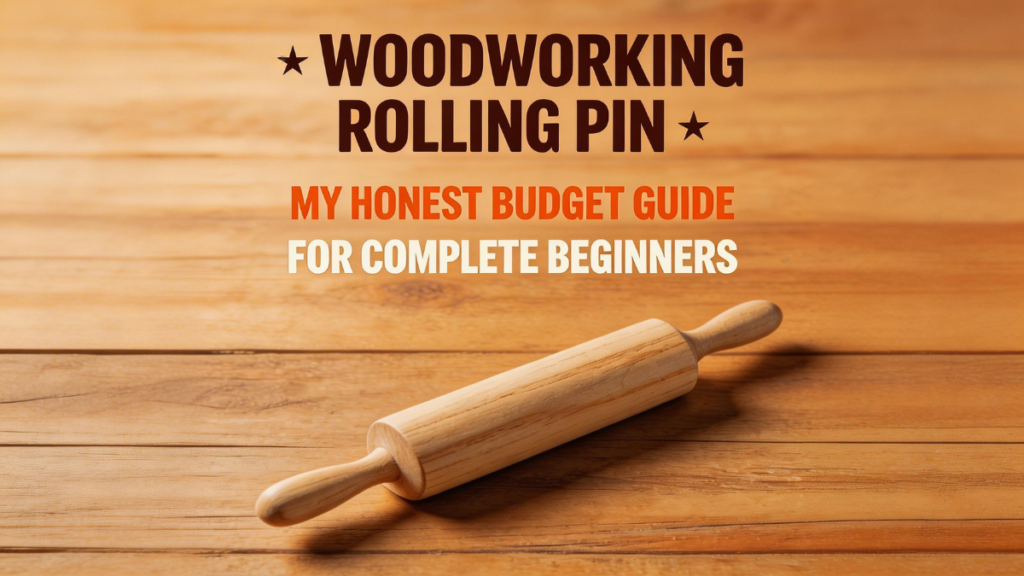

Ok so let me tell you something funny. Last year my mom asked me to get a nice rolling pin for the kitchen. I went online, checked few stores and the prices were like 30 to 50 dollars for a decent wooden one. And I was like wait, I do woodworking at home why cant I just make one myself? Thats how my first woodworking rolling pin project started and honestly it was one of the most fun things I ever made in my small workshop.
If you are a beginner like me who dont want to spend too much money on buying fancy kitchen stuff from stores then trust me you can totally make your own rolling pin at home. It is way more easy than you think. And in this post I am going to share everthing I learned, what mistakes I made, what sizes work best, which wood to pick and how you can do the whole thing on a tight budget.
So grab a cup of chai or coffee and lets get into it yeah?
Why Even Bother Making Your Own Rolling Pin
You know what, this is a question I asked myself too at the start. Like why not just go buy one from Amazon or Walmart right? Well here is the thing. Store bought rolling pins, specially the wooden ones, they look good but many of them are made from cheap softwood. They get dented real quick. And the handles oh my god some of them feel like they gonna break in two weeks.
When you make your own woodworking rolling pin you get to pick the wood. You control the size. You decide the finish. And most importantly it costs you way less than buying a proffesional one. I made my first one for less than 10 dollars. Can you believe that?
Plus there is this feeling you get when your family uses something you made with your own hands. My mom still shows it to her freinds when they come over haha. That feeling, you cant buy that from any store.
What Type of Rolling Pin Should You Make
Before you start cutting any wood let me tell you there are basically two main styles of rolling pins that people make at home.
French style rolling pin is the easiest one for beginners. It has no handles at all. Just a solid piece of wood, usually tapered on both ends. The middle part is thicker and the ends get thinner. This gives you better control when rolling dough. You can feel the dough under your palms and thats actually a big advantage for baking.
Then there is the American style with handles. This one has a cylinder body in the middle and two handles on the sides. Sometimes the handles spin freely using bearings inside. This one looks more traditional but it requires more work, more tools and usually a woodworking rolling pin hardware kit.
For complete beginners I always say go with the French style first. No handles to worry about, no bearings, no drilling through the center. Just shape a piece of wood and you are done. Simple na?
Woodworking Rolling Pin Sizes That Actually Work
Ok so this part confuesed me a lot when I was starting out. Everyone online says different sizes and I was like which one do I follow? So after making like 5 or 6 rolling pins and testing them with my family I found out what works best.
For a French rolling pin the sweet spot is around 18 to 20 inches total length. The center diameter should be about 1.5 to 2 inches and the tapered ends should come down to about 3/4 to 1 inch. If you have a small kitchen or small countertop then a 14 inch version works great too.
For the handled American style most people go with a body thats 10 to 12 inches long and about 2 to 2.5 inches in diameter. The handles are usually 4 to 5 inches each.
Here is a quick breakdown so you dont get confuesed like I did:
French Rolling Pin Dimensions Total length: 14 to 20 inches Center diameter: 1.5 to 2 inches End diameter: 0.75 to 1 inch
American Style Rolling Pin Body length: 10 to 13 inches Body diameter: 1.75 to 2.5 inches Handle length: 4 to 5 inches each
Honestly the dimensions are not super critical. You can adjust them based on what feels good in your hands. I made one for my aunt that was slightly fatter because she liked heavier pins for rolling chapati dough. So yeah customize it however you want.
Best Wood for Making a Rolling Pin
Choosing the right wood is actually the most important step in this whole project. You want something that is hard enough so it doesnt get dents from daily use and also safe for food contact.
Maple is hands down the most popular choice and for good reason. It has a tight grain, its very durable and it looks beautiful with just some mineral oil finish. Hard maple or sugar maple is what most proffesional rolling pins are made from.
Cherry is another fantastic option. It has a lovely warm color and it ages really nicely over time. The grain is tight enough for kitchen use and its a pleasure to work with hand tools.
Walnut is a bit debatable. Some woodworkers love it because of the dark rich color. Others say the pores are a little bit more open compared to maple or cherry. I made one from walnut and it works fine for me but if you want the safest choice then go with maple.
Birch is also a good budget option. Not as fancy looking as maple but it does the job. Beech is popular in European rolling pins too.
Stay away from softwoods like pine or fir. They get damaged very easily. Also avoid exotic woods because some of them can cause skin reactions and thats the last thing you want in a kitchen tool. Oak is another one I would skip because the open pores make it hard to clean properly.
Tools You Need (Budget Friendly List)
Here is where many blogs scare beginners by listing expensive tools. You do NOT need a wood lathe to make a rolling pin. I repeat you do not need a lathe. Yes a lathe makes things faster and gives a more polished look but for your first woodworking rolling pin you can totally do it without one.
Here is what I used for my first pin:
A wood dowel (2 inch maple dowel from hardware store) Sandpaper (120 grit and 300 grit) Mineral oil (food grade) A hand saw (if you need to cut the dowel to size) A measuring tape
Thats it. Total cost was under 15 dollars. The dowel itself was the biggest cost.
If you already have some basic tools at home then check out my woodworking fastener guide for beginners where I talk about what essential stuff you should keep in your workshop.
Now if you want to make a handled rolling pin with spinning handles then you will need a woodworking rolling pin hardware kit. These kits usually come with a steel rod, bearings, washers and sometimes nylon bushings. You can find them at places like Woodcraft for around 20 dollars. Some people even go to local hardware shops and pick up individual bearings and rods for cheaper. A stainless steel rod and couple of sealed bearings is all you really need.
Step by Step: How I Made My First Rolling Pin
Let me walk you through exactly what I did. Keep in mind this is the simple dowel method, no lathe needed, perfect for beginners on a budget.
Step 1: Get Your Wood I went to my local woodworking shop and bought a 2 inch maple dowel that was 36 inches long. Cost me about 16 dollars. But heres the trick, I cut it in half and got two rolling pins from one dowel. So each pin came out to only 8 dollars. Pretty smart right?
Step 2: Cut to Size I marked 18 inches and cut it with my hand saw. You can ask the store to cut it for you too. Most places do it for free which is nice.
Step 3: Sand It Smooth Started with 120 grit sandpaper and went over the whole dowel. Then switched to 300 grit for a smoother finish. This step is important because you want the surface to be really nice and even. No rough spots should be there at all. Spend good time on this part dont rush.
Step 4: Clean Off the Dust Wiped the whole thing with a clean dry cloth. Make sure there is no sawdust left on the surface.
Step 5: Apply Mineral Oil Rubbed food grade mineral oil all over the rolling pin. Cover every part, the ends too. Think of it like applying lotion on your skin haha. Then I let it sit overnight. Next morning I could see the grain of the wood looking so much better. The color really pops out with the oil.
Step 6: Second Round of Sanding and Oil Lightly sanded again with 300 grit. Wiped clean. Applied one more coat of mineral oil. This second coat makes the finish much more durable and smooth.
And thats it. Done. My first woodworking rolling pin was ready.
If you want to learn more about finishing techniques and how staining works check out my guide on woodworking staining for beginners. Its really helpfull for understanding how to protect wood properly.
What About a Woodworking Rolling Pin Kit
So some of you might be wondering if there are ready made kits available. Yes there are. A woodworking rolling pin kit usually comes with either a pre drilled wooden blank or just the hardware parts like steel rod, bearings and washers.
The hardware only kits are nice if you already have wood at home or if you want to turn your own body on a lathe. These are great for the handled roller style pins where the handles need to spin.
Pre drilled blanks come in maple, walnut, cherry and even curly maple. Prices range from about 20 to 30 dollars for the blank alone. Plus the hardware kit is another 15 to 20 dollars. So total you are looking at maybe 35 to 50 dollars if you go the kit route.
Now compare that to my dowel method which cost me 8 dollars per pin. You see why I love the budget freindly approach right? But I will say this, if you want to make a really fancy handled rolling pin as a gift then investing in a kit is totally worth it. Handmade gifts have this special touch that money cant buy.
Finishing and Food Safety Tips
This is one area where I see many beginners making mistakes. Please please dont use regular wood finish or polyurethane on a rolling pin. It is going to be touching food so everything on it must be food safe.
Here are your best options:
Mineral oil is the easiest and most common choice. Its cheap, food safe and super easy to reapply whenever the pin looks dry. I use it on almost all my kitchen woodworking projects.
Walnut oil is another good option. It gives a natural finish and gets harder over time. But keep in mind it can go bad after few months if not used, so only use fresh walnut oil.
Beeswax mixed with mineral oil creates a nice protective coating that feels smooth and resists water a little bit. This is what I use on my newer pins and I love the result.
Never use varnish, lacquer or any chemical based finish on kitchen items. Just dont do it.
Also one important care tip. Never soak your rolling pin in water. Never put it in dishwasher. Just wipe it with a damp cloth after use and let it air dry. Reapply mineral oil once a month or whenever it starts looking dry. If you take care of it properly a good wooden rolling pin will last you many many years. Some people have rolling pins that their grandmothers made and they still work perfectly fine.
Can You Sell Handmade Rolling Pins
You know what this is something I have been thinking about lately. I made few rolling pins as gifts for family and freinds and everyone loved them so much that people started asking can I buy one from you?
Turns out handmade woodworking rolling pins sell really well on platforms like Etsy. French style pins in maple or cherry with nice grain patterns can go for anywhere between 15 to 50 dollars depending on the wood and craftsmanship. Some makers sell exotic wood combinations for even more.
If you are looking for ways to earn from your hobby this could be a great starting point. The material cost is low, the making process is simple once you get the hang of it and people genuinely appreciate handmade kitchen items. Its a win win situation honestly.
Common Mistakes I Made (So You Dont Have To)
Let me be real with you. My first rolling pin was not perfect. Not even close haha.
I used pine wood for my very first attempt because it was cheap. Bad idea. Within two weeks of use it had dents all over. Lesson learned, always use hardwood for items that will take some beating.
I also didnt sand enough on my second pin. Left some rough patches and my mom complained that dough was sticking to it. So yeah sand it properly. Take your time with it.
Another mistake was not applying enough oil. I did just one thin coat and the wood started looking pale and dry within a month. Two coats minimum is what I recommend now.
Oh and one more thing. I tried tapering the ends of a French pin with just a knife and rasp. It looked uneven and not great. If you want tapered ends and dont have a lathe then use a good wood rasp and take it slow. Mark your guidelines first with a pencil and keep checking from all sides. Patience is key here.
FAQ
What is the best wood for a woodworking rolling pin?
Maple is the top choice because it has tight grain and it is very hard wearing. Cherry and birch also work great for kitchen rolling pins.
Do I need a lathe to make a rolling pin?
No you dont. A simple wooden dowel, sandpaper and mineral oil is enough to make a beautiful French style rolling pin at home on a budget.
What are typical French rolling pin dimensions?
Most French pins are 18 to 20 inches long with 1.5 to 2 inch center diameter tapering down to about 1 inch on the ends.
Where can I buy a woodworking rolling pin hardware kit?
Stores like Woodcraft sell complete kits with steel rod, bearings and washers for around 20 dollars. You can also find individual parts at local hardware shops.
Is mineral oil safe for finishing a rolling pin?
Yes food grade mineral oil is completely safe and it is the most recommended finish for any wooden kitchen item.
How do I care for my handmade rolling pin?
Wipe it clean with a damp cloth after each use. Never soak it in water. Apply mineral oil once a month to keep the wood healthy and beautiful.
Wrapping Up My Rolling Pin Journey
So yeah thats pretty much everything I know about making a woodworking rolling pin on a budget. Whether you want to make a simple French pin from a dowel or go all out with a handled version using a hardware kit, the process is really enjoyable and the results are so satisfying.
My biggest advice to you as a fellow beginner is just start. Dont overthink it. Get a piece of maple, some sandpaper and mineral oil. Give it a try this weekend. The worst that can happen is you end up with a slightly imperfect rolling pin that still works perfectly fine in the kitchen. And trust me your family will love it.
I am Udit Das from easydiywood.com and I share simple wood project ideas for people like you and me who enjoy making things at home. If this post was helpfull do share it with someone who might enjoy making their own woodworking rolling pin too.
Happy making and see you in the next project!