
Okay so let me ask you something straight. You want to start woodworking, you watch those YouTube videos, you feel all excited and then you go check the price of tools online and your heart just sinks right? Yeah. I know that feeling very well.
When I, Udit Das, first got into woodworking I had no clue there is something called a woodworking library that could literally save me hundreds of dollars. Nobody told me! I wasted almost two weeks thinking “how will I afford all this” before someone in a Facebook group mentioned tool libraries and I was like bhai, why nobody say this before!
So today I am going to explain everything about the woodworking library concept in the simplest way possible. This post is specially for people in USA who are just starting out and dont want to spend too much money at the beginning.
What Actually is a Woodworking Library?
Okay so the term woodworking library can mean two or three different things depending on where you are looking.
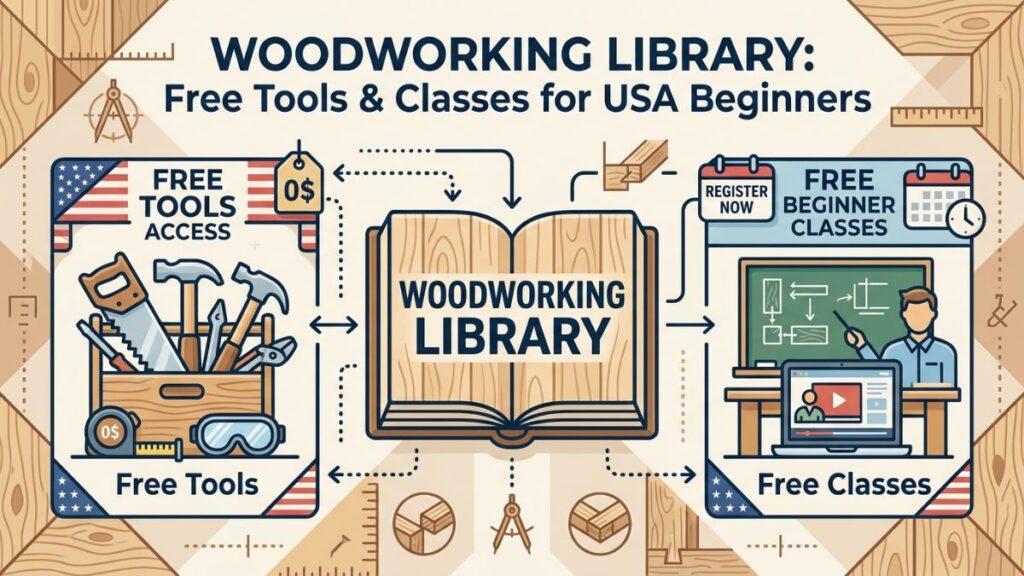
The first meaning is a library of tools, basically a place where you borrow woodworking tools same way you borrow books from a regular library. You pay a small membership fee and then borrow tools as you need them. No buying, no storing in your tiny apartment, no tension at all.
The second meaning is a collection of woodworking books, plans and project patterns that public libraries keep, usually for completely free. You just need a library card and you can borrow as many woodworking books as you want.
And the third thing, which honestly blew my mind when I found out, is that many public libraries in USA now have actual woodworking makerspace rooms inside the building itself. You go in, use real power tools, get help from staff, and pay very little or sometimes nothing at all.
So a woodworking library in any of these forms is basically your best freind when you are a beginner with low budget. Lets go deeper.
Why a Woodworking Library is Perfect for Budget Beginners
Let me be honest with you. When you are a beginner, you dont even know which tools you will actually use regularly. Maybe you buy an expensive router and then realise after two weeks you dont even need it yet for your projects. That is money just gone.
A woodworking library lets you test different tools before commiting to buying them. This is the smartest budget friendly approach in my opinion.
Also, most beginners make mistakes in their first few projects. This is totally normal! But if you are using borrowed tools from a woodworking library, at least you are not ruining a $300 tool you just bought.
Space is also a huge problem. Many people starting woodworking in USA live in apartments or small homes. Where will you keep a table saw? You cant. But a woodworking library with a workshop space solves this completely because the machines stay there, you just go use them.
If you want some simple project ideas to practice once you get tool access, my guide on DIY woodworking projects for beginners free has really easy and cheap ideas you can start with right away.
Denver Tool Library – Best Example of a Woodworking Library in USA
Okay I have to talk about this place first because it is honestly one of the best real life examples of a woodworking library in the whole country.
The Denver Tool Library is a nonprofit organization in Denver, Colorado. Think of it exactly like a book library but the books are replaced with tools. For around $150 per year you get access to more than 5,000 tools covering woodworking, home renovation, garden, metalworking and much more. No extra charge per tool after your membership fee.
With a basic membership you can borrow up to 10 tools at one time with upto 3 power tools allowed, and you keep them for one week. After that you return and take new ones. This is incredible value for someone who wants to explore woodworking without buying everything.
The Denver Tool Library also has an open community workshop with industrial size woodworking machines like a SawStop table saw, jointer, planer, bandsaw, miter saw, drill press, router table and lathes. You pay a small hourly rate to use the space and there is always a trained staff monitor there to keep you safe and answer questions.
They also run events like the Denver tool library repair fair where people come together to fix broken tools, furniture and other household items. Its a fantastic way to learn hands on repair skills and meet other woodworking enthusiasts in your area.
One more thing I love about the Denver Tool Library is that if you have a Denver Public Library card, you can sometimes borrow a DTL membership pass for free through the public library system. So you can actually try the whole woodworking library experience before paying anything.
Boulder Tool Library – What’s Available Near Boulder Colorado
If you live near Boulder, Colorado, the Boulder tool library situation is a little different and maybe slightly confusing. Resource Central used to run a tool lending program in Boulder but they stopped that in 2023. They now sell used tools at their retail location in Boulder instead.
But dont worry, Boulder still has great woodworking library options through the public library system. The Boulder Public Library has two makerspace locations, one called BLDG 61 at the Main Library and another called STUDIO 24 at the NoBo branch. Both have woodworking tools and equipment you can use.
Open studio hours at the Boulder library makerspace are available on Tuesdays, Wednesdays and Saturdays at the Main Library location. Staff members are available to guide you, and there is no registration needed for drop-in hours. You can also book a proper tool appointment from Thursday through Saturday.
So the Boulder tool library spirit lives on through the public library makerspace network even though the standalone tool lending service ended. For a beginner this is still a really valuable free woodworking library resource.
Woodworking Library in Columbia SC – Richland Library Makerspace
If you are looking for woodworking classes Columbia SC for adults, the Richland Library in Columbia, South Carolina has something truly special that most people dont even know about.
They have two spaces inside the library, a Makerspace and a Fabrication Studio, both free to use for Richland Library cardholders who are 18 years or older. Inside they have professional grade equipment including a table saw, 15 inch bandsaw, 12 inch jointer, 20 inch planer, chisels, hand planes, carving tools and even a laser cutter. This is basically a full professional woodworking library workshop inside a free public building.
To get started you need to attend an orientation session first which covers safety, equipment overview and your skill level assessment. Wait times for orientation can be one to three weeks depending on availability so plan ahead.
For woodworking classes Columbia SC for adults, the Richland Library regularly runs skills and project based classes in the makerspace. This is the perfect entry point if you are a complete beginner who wants guided help before working independently in a woodworking library setting.
What is a Woodworking Collective and How is it Different From a Library?
People sometimes mix up a woodworking collective with a woodworking library and honestly thats understandable because they do overlap a bit.
A woodworking collective is usually a group of woodworkers who come together to share a workspace, share tools, share costs and sometimes even share skills and teach each other. Members typically pay a monthly fee and get access to the shared shop and everything inside it. Think of it more like a co-working space but for woodworking.
A woodworking library, on the other hand, is more focused on the borrowing and returning of tools or the access to learning materials. The Denver Tool Library is a great example that does both things actually, it has the tool lending library side AND a community workshop side.
If you are a total beginner with zero experience, a woodworking library with guided open workshop hours is probably the better starting point because you get expert help and dont have to fully commit to a monthly membership right away.
How to Use a Woodworking Library – Simple Step by Step for Beginners
Okay many beginners feel nervus about walking into a woodworking library or makerspace for the first time. I felt the same trust me. Here is a simple step by step to make it easy:
Step 1 – Find a woodworking library near me Google “woodworking library near me” or “tool library near me” with your city name. Also check your local public library website to see if they have a makerspace or fabrication studio section. You will be surprised how many cities have these.
Step 2 – Get your membership or library card Most public library based woodworking library programs just need a regular free library card. Standalone tool libraries like the Denver Tool Library need a paid annual membership starting around $150 per year.
Step 3 – Attend the safety orientation Almost every woodworking library workshop will require you to take a safety class before using machines. Please dont skip this. It is actually really useful and will save you from making dangerous mistakes.
Step 4 – Plan a simple beginner project Once you have access to a woodworking library workshop, please dont try to build something complicated on your first visit. Start with something small and simple like a small shelf or a basic wooden box.
Speaking of simple beginner builds, you can also take inspiration from my post on shadow box woodworking for budget beginners which is a great first project using very basic tools.
Step 5 – Borrow smartly from the library of tools Only borrow the tools you actually need for your current project. Dont take everything available just because you can. Keep it focused and manageable, especially in the beginning.
Free Online Woodworking Library Resources You Should Know
A woodworking library does not always have to be a physical building. There is a huge free online woodworking library available to anyone with internet connection.
Your local public library card often gives free access to digital platforms like Hoopla and Kanopy where woodworking video courses are sometimes available for no extra cost. Many libraries also subscribe to ebook platforms where you can borrow woodworking project books, technique guides and plan collections digitally.
YouTube is also a massive free woodworking library for video tutorials. Creators who focus on beginner friendly content are especially helpful when you are just starting out. And sites like Instructables work as a giant free woodworking library of step by step project plans written by real makers.
One external resource worth bookmarking is the Wood Magazine free project plans section which has a solid collection of beginner woodworking plans at no charge. Another great one is Woodworkers Guild of America which has lots of free beginner tutorials and technique videos in their online woodworking library section.
Tips to Get Maximum Value from Any Woodworking Library
Alright so you found a woodworking library, you got access, now how do you really make the most of it? Here are some honest practical tips:
Go during off-peak hours when possible. Weekday mornings at a woodworking library workshop are usually less busy so staff members can give you more individual attention.
Talk to the workshop monitors and staff. They know an incredible amount and they are almost always happy to help. Honestly I have learned more in one hour of real conversation at a woodworking library than I did watching videos for weeks at home.
If you borrow a tool from a woodworking library for one week, actually use the whole week to practice and understand that tool properly before returning. Dont let it sit at home unused.
Keep a simple notebook about every tool you use. Write down what you liked, what felt confusing, what worked well for your project. This helps you decide what tools you want to eventually buy yourself after using a woodworking library for a while.
And bring your own lumber. Most woodworking library workshop spaces provide the machines but you need to supply your own wood. Pine and plywood from a local hardware store are both cheap and beginner friendly choices.
Conclusion
So there you have it! A woodworking library is honestly the best budget secret for anyone in USA who wants to get into woodworking without spending a lot of money upfront. Whether it is the fantastic Denver Tool Library, the Boulder tool library makerspace at the public library, the Richland Library woodworking library makerspace in Columbia SC, or just your own local library fabrication studio, there are so many ways to access a real woodworking library for very little cost.
Dont let the price of tools stop you from starting. A woodworking library near me or near you is probably closer than you think. Just go search online, visit the place, attend the orientation and start making things. It really can be that simple.
The woodworking community in America is so welcoming and supportive. A woodworking library or a woodworking collective is a perfect place to connect with like minded people, build real skills and make actual things with your hands without spending all your savings.
I hope this full guide was helpful and made things clearer for you. If you have any question about finding a woodworking library near your city just drop a comment below. I will try my best to help. Happy building everyone!
FAQs About Woodworking Library
Q1. What is a woodworking library and how does it work for beginners?
A woodworking library is a place where you borrow tools or use workshop machines like a book lending system. You get a membership or library card, then access tools or makerspace facilities at low or zero cost.
Q2. Is the Denver Tool Library actually free to use?
Not completely free but very affordable. A yearly membership costs around $150 and after that you can borrow over 5,000 tools with no extra charge per tool or per checkout.
Q3. How do I find a woodworking library near me in any US city?
Just Google “tool library near me” or “library makerspace near me” with your city name. Most medium and large US cities have either a tool lending library or a public library with a free makerspace woodshop.
Q4. Are there free woodworking classes available through a library?
Yes! Places like Richland Library in Columbia SC offer free makerspace access and woodworking workshops to cardholders. Denver Tool Library also runs very affordable beginner woodworking and safety classes regularly.