
Okay so let me tell you something embarrassing first. When I started my woodworking journey, I broke like five pieces of wood in one single weekend, just by screwing them wrong. Thats when I actually sat down and learned how to screw wood without breaking it, and today I am sharing everything I learned, mistake by mistake, with you.
If you are a complete beginner, first of all, welcome. You are exactly the person I am writing this for. This is not some fancy carpenter article, this is just me, Udit, explaining what worked for me after breaking a lot of cheap plywood.
Why Does Wood Break When You Screw It Anyway?
So here is the thing nobody explained to me properly in the beginning. Wood is not like metal, it has these tiny lines running through it called grain, kind of like the lines on your hand.
When you push a screw straight into wood without any prep, it pushes those grain lines apart with force. And boom, crack. That crack happens mostly near edges, or when wood is dry, or when you use too much power on your drill.
Learning how to screw wood without breaking it basically means learning how to respect these grain lines instead of fighting them. Simple concept, but honestly it took me few failed boards to actually understand it in real life, not just in theory.
What You Actually Need (Budget Friendly Tools List)
You dont need expensive tools for this, I promise. When I was starting, my budget was very very tight, so here is what actually works without burning your pocket.
A basic cordless drill, even a cheap one from local hardware shop works fine. A set of drill bits, doesnt need to be premium brand. Some wood screws, coarse thread ones for soft wood, fine thread for hard wood. And maybe a small clamp if you have one lying around.
That is literally it. If you are curious about building your whole workshop without spending too much, I actually wrote a detailed post on starting woodworking on a low budget which pairs really well with this guide.
The Real Secret Behind How To Screw Wood Without Breaking It
Everyone online says pilot hole, pilot hole, pilot hole. And honestly, yes, it is true, but nobody actually explains WHY in simple words.
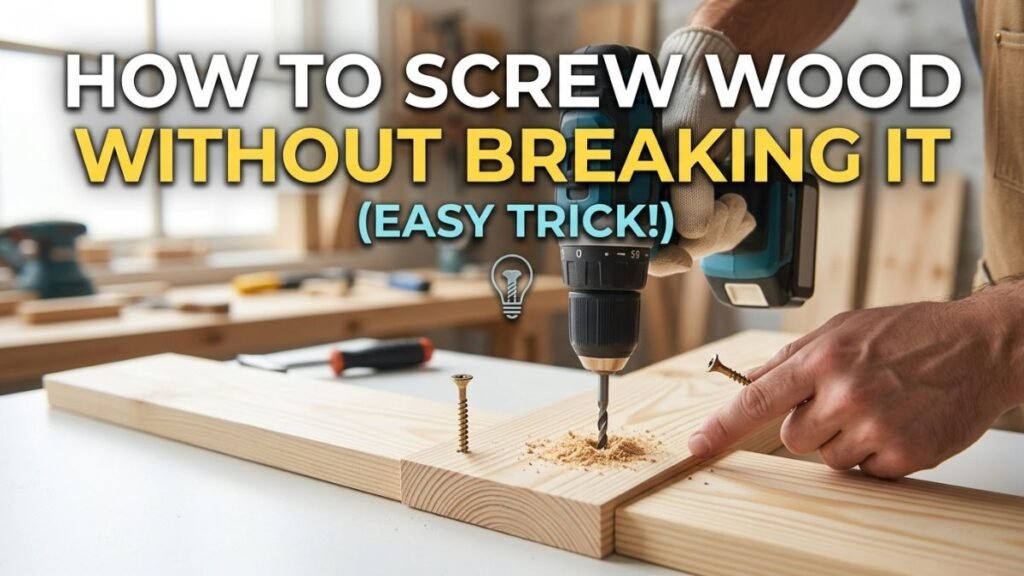
A pilot hole is just a small hole you drill before putting in the actual screw. Think of it like digging a small path before walking on grass, instead of just stomping through it.
This tiny hole gives the screw somewhere to go without pushing the wood fibers apart with full force. This single step alone solved like 80 percent of my splitting problem when I was figuring out how to screw wood without breaking it.
For soft wood like pine, keep your pilot hole slightly smaller than the screw. For hard wood like oak, keep it almost same size as the screw, sometimes even little wider. I know this sounds confusing at first, dont worry, you will get a feel of it after two or three tries.
Step By Step Method I Personally Use Now
Alright let me break down exactly how I do it now, after learning how to screw wood without breaking it the hard way.
First, mark the spot where you want the screw. Use a pencil, nothing fancy needed.
Second, drill a small pilot hole at that mark. Go slow here, dont rush this part, this is literally the whole trick.
Third, if you want a clean finish, make a small countersink so the screw head sits flush with the wood surface. This part is optional for rough projects but I like doing it anyway.
Fourth, now take your screw and drive it in slowly using low speed on the drill. High speed is actually one of the biggest reasons people fail at how to screw wood without breaking it, because the drill just goes in too fast and too hard.
Fifth, stop as soon as the screw head sits flat. Dont keep pushing after that, that overtightening is another silent wood killer.
Mistakes I Made (So You Dont Have To)
I want to be honest here because I made literally all of these mistakes myself.
I used to screw too close to the edge of the wood, like within few millimeters, and it cracked almost every single time. Keep some distance from edges, atleast 2 to 3 centimeters if possible.
I also used to screw straight into end grain, which is basically the tip of the wood where the grain lines end. This part breaks the easiest. If you must screw there, use a longer pilot hole and go really slow.
Another mistake, I used random screws from my dads old toolbox, mix of drywall screws and wood screws. Drywall screws are actually more brittle and snap easier under pressure, they are not really made for proper woodworking. This whole confusion added extra time to my learning of how to screw wood without breaking it properly.
I also didnt know much about the actual screw itself, like how the threads and shank work together, until I read a bit about it later. Understanding that basic anatomy actually made things click for me.
Best Screws For Absolute Beginners
If you are confused standing in the hardware store like I was, here is my simple advice.
Pick number 8 size wood screws, they work for most small home projects. Choose star drive or square drive heads over the old plus shaped ones, they slip less while screwing.
Coarse thread for softwood and plywood, fine thread for hardwood like oak or teak. This one small choice makes a big difference when you are trying how to screw wood without breaking it consistently.
If you want a proper breakdown of different fastener types for beginners, I already covered it deeply in my fastener guide for beginners, that post goes even deeper into screw types than this one.
My Bonus Budget Hack (This One Actually Works)
Okay this is my favorite cheap trick. Rub a normal bar of soap, yes the bathroom one, on the screw threads before driving it in.
It acts like a natural lubricant and the screw slides in much smoother, with way less pressure on the wood. Some carpenters use wax or a small countersink tool for this, but honestly soap works surprisingly well for a beginner budget project and cost literally zero rupees extra.
This little hack changed how easily I could figure out how to screw wood without breaking it on harder wood pieces, especially old dry wood that cracks very easily otherwise.
Does Wood Type Really Matter That Much?
Yes, actually alot. Soft wood like pine forgives mistakes more, it bends a little before cracking.
Hard wood like oak or teak is way less forgiving, it just cracks straight away if you rush. So when practicing how to screw wood without breaking it, I always suggest beginners start with cheap soft wood scraps first.
Practice on scraps, mess up as much as you want there, nobody is judging your test pieces. Once you feel confident, then move to your actual project wood.
Clamping Also Helps More Than People Think
I didnt realize this initially, but clamping your wood down while screwing actually reduces movement, and less movement means less chance of splitting.
If the wood shifts even slightly while the screw is going in, it creates uneven pressure inside, and that is often when cracks happen. A simple clamp, nothing expensive, solves this problem quietly in the background.
Quick Recap Before We Wrap Up
So basically, how to screw wood without breaking it comes down to few honest points. Drill a pilot hole first. Go slow on your drill speed. Keep distance from edges. Use proper wood screws, not random ones. And maybe rub some soap if you are feeling lazy like me sometimes.
None of this needs expensive tools or professional training, just patience and little bit of practice on scrap wood.
Final Thoughts From Me
Honestly, learning how to screw wood without breaking it was one of those small skills that made me feel like a real woodworker for the first time, even though it seems so basic looking back now.
If a school level English speaking, budget conscious guy like me could figure this out through trial and error, you definately can too. Just go slow, dont rush your drill, and respect the wood grain.
That is really all there is to how to screw wood without breaking it, no magic, just patience and a cheap drill bit.
FAQs
Why does my wood keep splitting even with a pilot hole? Your pilot hole might be too small for the screw size, or you are screwing too close to the edge, try widening it slightly.
Do I need a pilot hole for small screws too? Yes, even small screws benefit from a tiny pilot hole, especially in hardwood or near edges.
Can I use wood glue to stop splitting? Wood glue helps hold cracked pieces together but wont prevent splitting, pilot holes and slow drilling do that job better.
What is the best drill speed for beginners? Keep it on the lowest speed setting with moderate torque, rushing the speed is the top reason beginners crack wood.