
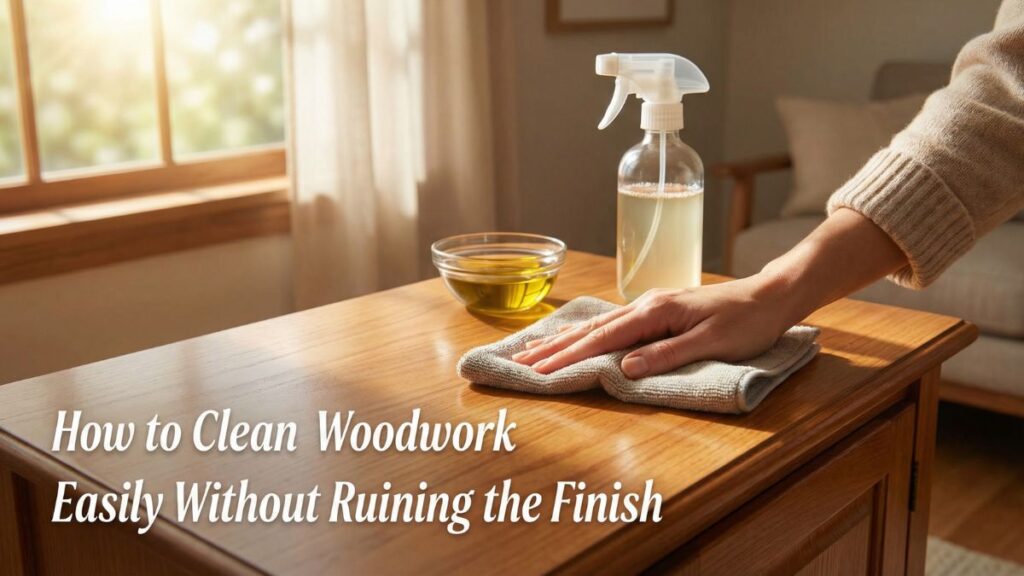

Hey freinds, I am Udit Das and welcome back to easydiywood.com! So today I wanna talk about something which I learned the hard way honestly. How to clean woodwork. Yeah I know it sounds like a simple thing right? Just grab a cloth and wipe? But trust me learning how to clean woodwork properly took me a long time and I messed up so many times before I finally got it right.
See when I first started my woodworking hobby, I was only focused on building things. Small shelves, side tables, fun projects. But nobody ever told me that if you dont know how to clean woodwork the correct way, you can actually ruin your beautiful pieces. I once destroyed a nice side table because I used some random kitchen cleaner on it. The finish came right off and it looked terrible. That day I decided I must learn how to clean woodwork without causing damage.
In this guide I am going to share everything about how to clean woodwork at home using cheap stuff you already have. Whether you need to clean woodwork furniture, cabinets, baseboards, or even 100 year old antique pieces, this post covers it all. Lets jump right in.
Why You Should Learn How to Clean Woodwork (Its More Important Than You Think)
Ok so here is something people dont realize. Wood is not like plastic or metal. It breathes, absorbs moisture, and reacts to chemicals. When you dont clean woodwork regularly, dust and grime builds up and starts damaging the surface slowly over time.
I have seen so many people buy expensive wooden furniture and then never bother to clean woodwork surfaces at all. After few years they say the wood looks dull and lifeless. But thats not the woods fault yaar. If you know how to clean woodwork properly, your pieces will look amazing for decades.
When you clean woodwork on a regular basis, the wood grain stays visible and beautiful. Scratches from dust particles get prevented. And honestly your whole room just feels better when the woodwork is well maintained. Plus if you ever want to sell furniture later, well maintained pieces fetch way better prices.
First Step Before You Clean Woodwork Know Your Finish
This is something most beginners skip and I also made this same mistake. Before you start trying to clean woodwork in your home, you really need to understand what type of finish your wood has. Is it painted? Varnished? Raw unfinished wood? Because each one needs you to clean woodwork in a diffrent way.
Painted woodwork like baseboards and door frames is easiest to clean. The paint acts as a protective barrier so you can be a little aggressive when you clean woodwork thats painted.
Varnished or lacquered surfaces need gentle care. When you clean woodwork with a harsh product, the finish gets cloudy or starts peeling. Thats a nightmare nobody wants.
Raw unfinished wood is trickiest to clean. Water is its biggest enemy so you have to be super carefull about how much moisture touches the surface when you clean woodwork thats unfinished.
Before you grab any spray bottle, check your wood finish type first. This one small step saves you huge headaches when you clean woodwork of any kind.
Budget Friendly Supplies to Clean Woodwork at Home
Now here comes the good part. You absolutely dont need expensive products to clean woodwork. Most things you need are already sitting in your kitchen and thats what I love about this whole thing.
Here is my personal list to clean woodwork on a budget and everything together costs under 5 dollars:
Microfiber cloths or old soft cotton tee shirts. White vinegar which you probably have already. Baking soda from the pantry. Mild dish soap just the regular one. Olive oil or any cooking oil for polishing. A soft toothbrush for tight corners. A reusable spray bottle.
Thats literally it. When I first started learning how to clean woodwork furniture, I was shocked that these simple kitchen items work better than most store bought products. And they are way way cheaper which is perfect if you are on a tight budget like me. You dont need to spend big money to clean woodwork effectively.
How to Clean Woodwork With Vinegar Step by Step
Vinegar is like the superhero when it comes to how to clean woodwork cheaply. I use vinegar to clean woodwork all the time and the results are amazing every single time. Let me show you how to clean woodwork with vinegar the right way.
Take equal parts white vinegar and warm water. Pour them into a spray bottle. Thats your basic solution to clean woodwork right there. But hold on, before spraying everywhere, always test on a small hidden area first. Maybe the back of the furniture or underneath. Wait few minutes and see if the finish is ok.
Now spray a little on your soft cloth, not directly on the wood itself. This is important when you clean woodwork because you dont want excess liquid sitting on the surface. Wipe gently following the direction of the wood grain. After wiping with the damp cloth, immediately dry the surface with another clean dry cloth.
For extra stubborn greasy spots, add a tiny drop of dish soap to the vinegar mix. This really helps when you clean woodwork cabinets in the kitchen where cooking oil splashes build up. Learning how to clean woodwork with vinegar is honestly the most budget freindly method I know and it works on most wood types.
One warning though. Dont use vinegar to clean woodwork that has shellac finish. The acid in vinegar messes up shellac really bad. If you are unsure about your finish, stick with plain mild soap and water when you clean woodwork to be on the safe side.
How to Clean Woodwork With Baking Soda for Stubborn Stains
Sometimes vinegar alone aint enough to clean woodwork completely. Those stubborn water rings from coffee mugs? Sticky tape residue? This is where baking soda saves the day when you need to clean woodwork with tough stains.
Here is how to clean woodwork with baking soda the way I do it. Mix a small amount of baking soda with water until you get a thick paste. Like toothpaste consistancy not too runny. Put this paste on the stain with a soft cloth and rub gently in small circles.
Dont push too hard. Let the baking soda do the work not your muscles. Once the stain fades, wipe the area with a damp cloth to remove leftover paste, then dry it right away.
Last month I used this method to clean woodwork on my dining table when my kid left a hot cup directly on the surface. That ugly white heat mark came out beautifully with baking soda paste. I was so relieved because I thought the table was ruined.
But one important thing from my experience. Dont use baking soda to clean woodwork too frequently on the same spot. It is mildly abrasive and repeated scrubbing can dull the finish over time. Save this method only for when you really need to clean woodwork with tough stains.
How to Clean Woodwork Furniture the Right Way
Every homeowner should know how to clean woodwork furniture but surprisingly most people do it wrong. I build and clean woodwork furniture regularly so let me share my routine that actually works.
Start by dusting the whole piece with a dry microfiber cloth. This step is so important before you actually clean woodwork furniture with any liquid. Loose dust causes scratches during wet cleaning if you dont remove it first. Alot of people skip this and go straight to wet wiping which is a big mistake.
Next, dip a cloth in warm soapy water using just a tiny bit of dish soap. Wring the cloth really well so its just barely damp. Then clean woodwork furniture surfaces by wiping along the grain direction. Pay extra attention to handles, legs and carved details where dirt hides.
After that go over with a clean damp cloth to remove soap residue. Dry everything with a soft cloth. For extra shine put few drops of olive oil on a cloth and buff the surface gently. The oil feeds the wood and brings back that natural warm glow.
This process to clean woodwork furniture takes just 15 to 20 minutes and the results are incredible. I do this monthly and it makes a massive diffrence. If you enjoy building furniture yourself, check out my beginner woodworking projects guide for some cool ideas.
How to Clean Woodwork Cabinets Without Spending Much
Kitchen cabinets deal with grease, steam, food splashes and constant touching with oily hands. Thats why knowing how to clean woodwork cabinets properly is super important if you want them lasting long.
My budget method to clean woodwork cabinets is dead simple. Take the vinegar water spray, add a drop of dish soap, and spray on a cloth. Start from the top of cabinets and work downward. For areas near the stove, spray and let it sit for a minute because that grease buildup can be really thick and hard to clean.
For cabinet handles and knobs, use an old toothbrush dipped in the cleaning mix. It reaches those tiny grooves around hardware where grime collects. Most people forget to clean woodwork on top of upper cabinets but thats actually where the most dust piles up. Give those a good wipe too.
After you clean woodwork cabinets, dry everything properly. If the cabinets look a bit dull from years of use, a light coat of olive oil brings back some life. Such a cheap way to refresh the kitchen without spending on new cabinets or expensive refinishing stuff. This is by far the most economical way I know to clean woodwork in the kitchen.
How to Clean Dirty Wood Furniture That Nobody Touched for Years
This question comes to me so often. What if the furniture is absolutely filthy? Like it sat in storage or a dusty garage for years? How to clean dirty wood furniture that has layers and layers of grime?
First thing, dont panic. I have had to clean woodwork pieces that looked completely beyond saving and they turned out gorgeous. Start with a vacuum using a brush attachment to remove the top dust layer without spreading it around.
Then prepare a stronger solution to clean woodwork thats really neglected. Equal parts warm water, white vinegar and a good squeeze of dish soap. Dip your cloth, wring it well, and clean woodwork in small sections at a time. Change your cloth often because it gets dirty really really fast. I go through multiple cloths when I clean woodwork thats been ignored for years.
For carved areas and detailed parts, a soft toothbrush is your best freind when you clean woodwork with fine details. It reaches tiny gaps where years worth of dust has settled in. Just stay gentle dont scrub too aggressivly.
If vinegar and soap combo doesnt cut through the grime, mineral spirits from a hardware store work great. They cost very little and really help to clean woodwork with heavy buildup. But test on a hidden spot first and use in a ventilated room because the fumes are strong.
After the deep clean, let everything dry completely then polish with oil or wax. If you work with stained wood, my guide on woodworking staining basics has some useful tips you might like.
How to Clean 100 Year Old Woodwork Safely
Older homes in America often have gorgeous original woodwork thats decades or even centuries old. People are rightfully nervous to clean woodwork thats so old because what if they damage something irreplaceable? I totally get that fear.
When you need to clean 100 year old woodwork, the golden rule is go extremely slow and be very gentle. Before applying any product, figure out the finish type. Antique woodwork often has shellac which reacts badly to many cleaners.
Simple test I learned. Dab some denatured alcohol on a cotton swab and touch a hidden area of the woodwork. If the finish dissolves or turns sticky, its shellac. To clean woodwork with shellac finish honestly I recommend getting professional help because it needs special knowledge and products.
If the finish stays solid after the alcohol test then you can clean woodwork with a mild oil soap solution. Mix one part oil soap with six parts water. Use a barely damp cloth and wipe gently along the grain. Never soak old wood with water when you clean woodwork of this age.
For antique pieces I prefer soft cotton cloths rather than microfiber to clean woodwork gently. Work top to bottom always. After cleaning some people apply thin paste wax for protection which is optional but nice.
The goal when you clean 100 year old woodwork is not making it look brand new. You want to preserve the patina and character while just removing dirt. Thats the real beauty of antique wood.
How to Clean Wood Furniture Without Removing the Finish
This is everyones biggest worry right? You want to clean woodwork but definitely dont want to accidentally strip the finish off. Learning how to clean wood furniture without removing finish is all about using correct products in small amounts.
My golden rule to clean woodwork safely is less is more. Less water, less soap, less pressure. A barely damp cloth with mild dish soap is plenty for regular cleaning. The Bob Vila website has great home maintenance advice that helped me learn to clean woodwork properly.
Never ever use all purpose household cleaners to clean woodwork. They have chemicals that eat right through wood finishes. Same goes for bleach and ammonia based products. Keep all that stuff far away when you clean woodwork of any type.
When you wipe to clean woodwork, always go with the grain. Going against the grain creates micro scratches in the finish over time. And after wet cleaning dry the surface right away. Even small water amounts cause cloudyness if left sitting on the finish.
Another personal tip is avoid silicone based polishes when you clean woodwork and polish it. They create shine temporarily but build up a layer thats nearly impossible to remove later. Natural oils or beeswax products are much better to use after you clean woodwork. They nourish the wood without causing damage.
Mistakes Beginners Make When They Try to Clean Woodwork
Let me share my personal mess ups so you can avoid them. First mistake was using too much water to clean woodwork. I practically washed my bookshelf like a car. The wood swelled and veneer started peeling. Terrible.
Second mistake was not testing cleaners. I once sprayed vinegar directly on shellac finish trying to clean woodwork cabinets and the surface turned white and cloudy in seconds. Had to pay for professional refinishing. Always test in a hidden spot before you clean woodwork with anything.
Third mistake was using rough cloths to clean woodwork. Old towels with rough texture scratch wood surfaces. Always use soft microfiber or cotton tee shirts.
Fourth mistake was skipping the dusting step. When you try to clean woodwork by wet wiping a dusty surface, those dust particles act like sandpaper and scratch everything. Always dry dust first then wet clean.
Fifth mistake was using too much furniture spray. I thought more spray more shine right? Wrong. The buildup actually attracts more dust and makes things worse. The Real Simple website taught me that using minimal product is the key when you clean woodwork. Less really is more.
Simple Habits to Keep Your Woodwork Looking Great
Here are small things that make a big diffrence after you clean woodwork. Dust wooden surfaces atleast once a week. This alone prevents most issues.
Always use coasters and placemats on wooden tables. Heat and moisture from cups damage finishes the most.
Keep woodwork away from direct sunlight if possible. UV rays fade finishes and dry out wood over time.
Put felt pads under objects sitting on wooden surfaces to prevent scratches from daily use.
In winter when heaters run the air gets very dry and wood can crack. A humidifier helps maintain good moisture levels in your room.
Do a complete deep clean of all woodwork in your home every three to four months. It takes just one afternoon and the house feels so much fresher and nicer after. Knowing how to clean woodwork regularly means your stuff stays beautiful for years.
Conclusion
So there you have it freinds. Now you properly know how to clean woodwork like someone who actually does it, without spending lots of money. From vinegar solutions to baking soda paste, from everyday furniture care to handling 100 year old antiques, everything in this guide is beginner freindly and super budget focused.
When I look back at my journey, understanding how to clean woodwork correctly was one of the best skills I picked up for my hobby. Building beautiful wooden pieces is only half the story. The other half is knowing how to clean woodwork and maintain it so everything lasts for years and years.
Remember the basics. Be gentle, use minimal moisture, test your cleaner first, and clean woodwork on a regular schedule so dirt doesnt have chance to build up. These simple habits save you so much time money and frustration in the long run.
If you have questions or your own tips about how to clean woodwork, drop them in comments below. I would love hearing from you all. And if this helped you, share it with someone who needs it. Until next time, happy woodworking!
Frequently Asked Questions
What is the best homemade cleaner for woodwork?
Mix equal parts white vinegar and warm water in a spray bottle. Add one drop of dish soap if you need extra cleaning power. This works great on most wood surfaces and costs almost nothing.
Can I use baking soda on wood furniture everyday?
No you should not. Baking soda is mildly abrasive so using it too often can dull your wood finish. Only use it for tough stains or marks and not as a daily cleaner.
Is Murphy Oil Soap good for cleaning old woodwork?
Yes Murphy Oil Soap is a popular choice for old wood. Mix one part with six parts water and use a damp cloth to wipe. It cleans gently without stripping the finish and its been trusted for generations.
How often should I clean the woodwork in my home?
Dust weekly and do a deeper wipe down once a month. A full deep clean every three to four months is enough for most homes unless you have pets or kids who create more mess.